
Research & Sources · Deep dive
Fish Bones and Trade: Distinguishing an Arctic Cod from a Cargo
In Brief
Genetic and isotope evidence can connect fish remains to distant waters. Establishing transport is easier than measuring the trade that carried them.
On this page
A species is not a catch locationThe Haithabu genetic resultTransport is not automatically salePreservation made movement possibleA broader isotope sample shows regional differencesDNA and isotopes answer overlapping questionsTrade volume requires another kind of evidenceWhat a convincing fish-trade claim looks likeSourcesA species is not a catch location
Identifying a bone as Atlantic cod establishes a biological category with a wide geographical distribution. It does not reveal whether that fish was caught near the settlement where the bone was discarded. This is the problem addressed by the genetic study of Viking-age and medieval cod from northern European sites. Morphology and isotope evidence can sometimes leave several regions plausible, particularly when the species occurs across large marine areas. A provenance argument therefore needs a method capable of distinguishing populations or environmental histories within the species, not simply a more confident species identification.
Sources for this section: 1
The Haithabu genetic result
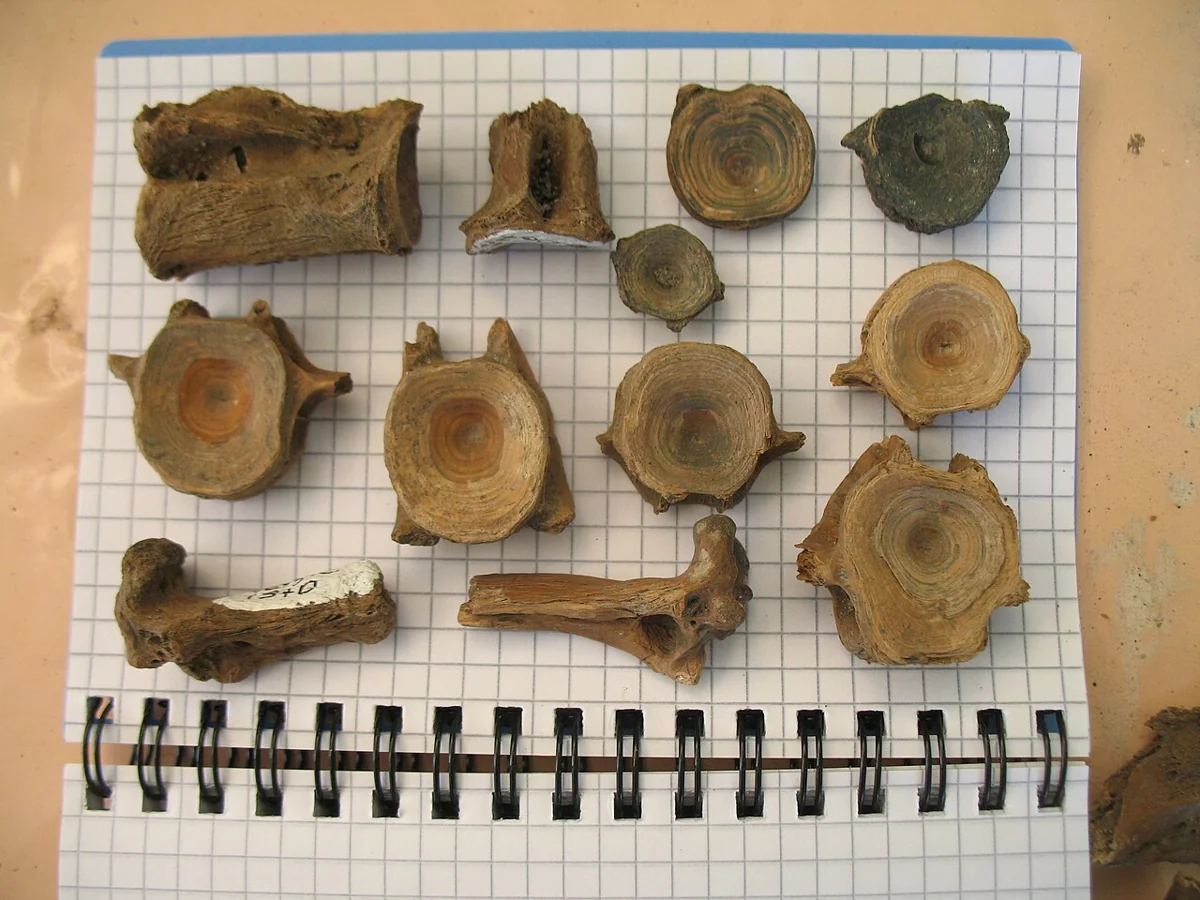
Researchers analyzed fifteen archaeological cod specimens from sites in Germany, Norway, and Britain, including five Viking-age bones from Haithabu, also known as Hedeby. Comparison with modern specimens linked the Haithabu fish to the Northeast Arctic cod population. The result establishes that fish with this biological origin reached the southern Baltic trading center. It is stronger than an inference based only on the presence of a northern-style object nearby. At the same time, the sample is small, and a genetic population assignment does not directly record the exact boat, landing place, or transaction responsible for the movement.
Sources for this section: 1

Transport is not automatically sale
Cambridge’s account of the research explicitly notes that the sample could not decide whether the cod traveled as traded goods or as provisions consumed during a voyage. Both scenarios involve long-distance movement of fish. Only one necessarily involves a sale at the destination. This distinction prevents a few well-provenanced bones from becoming a quantitative picture of a mature export industry. The evidence can establish an early connection while leaving its frequency and commercial organization open. Historians should state which part of the chain is observed and which remains an economic interpretation.
Sources for this section: 2
Preservation made movement possible
The researchers discuss stockfish, cod preserved by drying in northern conditions, as a plausible product behind the long journey. Preservation connects the biological result to practical transport: fresh fish and a durable dried product pose very different logistical problems. Yet the analyzed bone does not itself preserve a shipping label identifying the processing method. The historical argument combines the species, its inferred origin, the distance traveled, and known preservation possibilities. That combination is useful, provided the account keeps the distinction between direct molecular evidence and the reconstruction of handling and transport.
Sources for this section: 2
A broader isotope sample shows regional differences
A separate study used stable isotope evidence from 300 archaeological cod bones to examine sea-fishing expansion in England and Flanders. Its results favored largely southern North Sea sources during the ninth through twelfth centuries, with long-distance supplies becoming more important later. This does not contradict early Arctic cod at Haithabu. Different destinations could have different provisioning networks and chronologies. The comparison warns against turning one port’s early connection into a single timetable for all northern Europe. An early occurrence at one destination and a later expansion at another can both be correct within their respective samples. Scale and location must remain explicit when moving from a site study to a history of fisheries.
Sources for this section: 3
DNA and isotopes answer overlapping questions
A much later comparison comes from the Mary Rose, which sank in 1545. Researchers combined genetic and isotope analyses of a small selection of cod bones from its provisions. Individually, the methods gave broad answers; considered together with historical evidence, they narrowed plausible catch regions. This Tudor example is not evidence for Viking supply routes. It demonstrates a methodological principle relevant to the earlier material: biological ancestry and environmental chemistry can supply different constraints, and agreement between them can improve an interpretation without making either method infallible.
Sources for this section: 4
Trade volume requires another kind of evidence
Neither an Arctic genetic signature nor a regional isotope assignment directly measures tonnage, price, or annual frequency. Estimating those quantities would require broader sampling, reliable chronology, and archaeological or written evidence about production and distribution. Even the number of recovered bones depends on processing and disposal. An illustrative cargo prepared by removing heads elsewhere could leave a different skeletal pattern from fish landed whole. The 300-bone regional study gains strength from comparison across settlements, but its results still describe sampled archaeological remains rather than a complete account book of the medieval fish economy.
Sources for this section: 1, 3
What a convincing fish-trade claim looks like
A careful account identifies the species, sample size, date range, provenance method, comparison populations, and destination context. It then distinguishes biological origin, physical transport, preservation, and commercial exchange. Haithabu provides an important early Arctic connection; the English and Flemish isotope study shows that wider development was uneven; the Mary Rose illustrates the benefits of combining methods in a well-contextualized assemblage. These cases support a history of expanding and changing supply networks. Their value would be reduced, not increased, by claiming that a handful of Viking bones proves the size or organization of every later fish trade.
Sources for this section: 2, 3, 4
For the introductory context, read Fishing and Preserving Fish.
The Evidence
The sources below support this article. Interpretations and limits are explained in the text; this is not an exhaustive research review.