
Life & Society · Deep dive
Haymaking and Winter Survival on Northern Farms
In Brief
Winter fodder connected summer labor, soil management, herd decisions, and the household’s prospects for the following year.
On this page
Winter began with a summer decisionThe home-field was managed landHofstaðir and sustained investmentHay was not a uniform cropSeeds reveal continuity and differenceGreenland and the problem of waterA reserve sustained more than animalsSourcesWinter began with a summer decision
For northern livestock farmers, winter survival depended partly on work completed while plants were still growing. Animals kept for milk, breeding, and future production needed food beyond the season of plentiful grazing. Amorosi and colleagues describe the central calculation: how many animals could the available fodder support through a winter of uncertain duration? Keeping more animals increased potential future output but also increased demand on reserves. Slaughter reduced that demand while sacrificing animals that might otherwise reproduce or provide milk. This was not simply a matter of maximizing herd size. The difficult task was to preserve a viable herd and household together. A summer harvest therefore represented a commitment to future needs, made before anyone could know exactly when the next growing season would arrive.
Sources for this section: 1
The home-field was managed land
The area around an Icelandic farm dwelling, commonly called the home-field, was an important source of winter fodder. Adderley, Simpson, and Vésteinsson modeled production at three settlement-era home-fields in the Mývatn and Laxá region. Their results emphasized differences in local soils and climate as well as broader cold periods. Two farms within the same general region could face different productive limits. The study also found that increased manuring had its strongest effect during the first century after establishment, with a diminished effect later. These are modeled results rather than measurements taken by medieval farmers. They nevertheless show why hay production cannot be reduced to a uniform yield multiplied by a field’s area: the land’s history and management affected what it could provide.
Sources for this section: 2
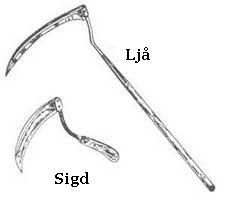

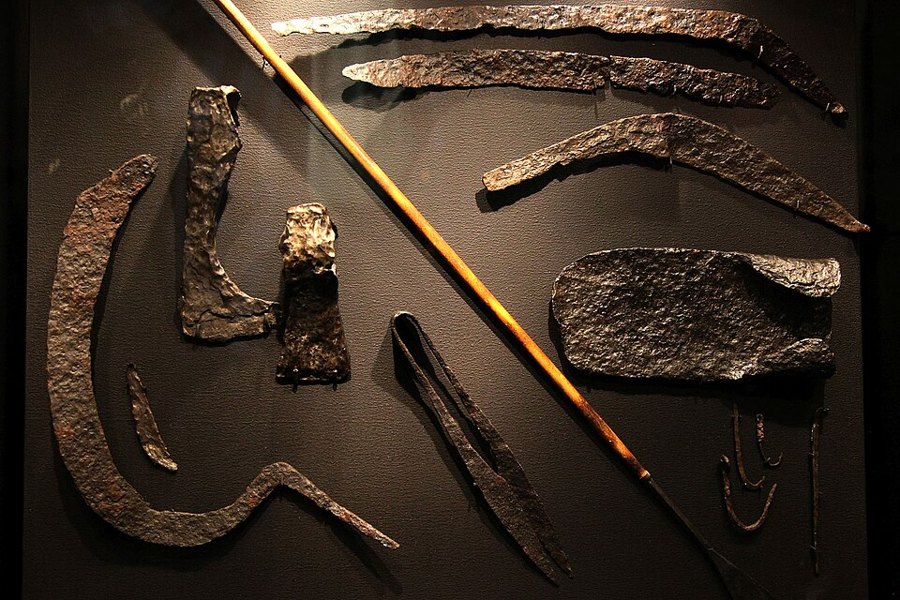

Hofstaðir and sustained investment
Research on the land around Hofstaðir combines soil evidence with modeling to investigate management. Animal manure and household waste contributed to maintaining productive ground. The study’s reconstruction suggests fluctuating hay-production potential from settlement through about 1100, while careful management could improve output and buffer unfavorable conditions. It also highlights the distinction between grazing resources across an estate and hay available from its home-field. A farm might have room for animals in summer without an equally generous reserve for winter. This is why the layout and productive quality of land matter alongside impressive buildings. Hofstaðir’s substantial hall does not make its environmental circumstances self-explanatory; sustaining livestock required continuing work across the surrounding estate.
Sources for this section: 3
Hay was not a uniform crop
Historical and environmental research in the North Atlantic distinguishes fodder gathered from different settings. Amorosi and colleagues discuss grass from improved infields, material harvested from other meadows, and supplementary resources. Their evidence ranges across medieval and much later periods, so particular modern practices cannot simply be assigned to the Viking Age. The useful comparison is the diversity of the feed supply. Two bundles of plant material might differ in their species, quality, and suitability for particular animals. Consequently, the presence of “hay” in an archaeological interpretation should open further questions rather than close them. Where did it grow, how did it reach the farm, and which animals received it? Fodder linked the household with several parts of the surrounding landscape.
Sources for this section: 1
Seeds reveal continuity and difference
Joseph Aramini’s study of Hjaltadalur farmsteads examines fodder strategies between about 870 and 1300 through seeds recovered from household middens. Nine farms supplied samples, compared across the 1104 volcanic ash layer, close in time to the establishment of the Hólar bishopric. At valley scale, the seed measures did not show a significant overall change, suggesting continuity in fodder practices despite institutional and social developments. Individual farms, however, varied substantially. This combination is historically important: a stable regional pattern can contain different local choices and circumstances. The result does not mean every household used identical feed or escaped difficult winters. It indicates that major political change did not necessarily produce a uniform transformation in the plant resources reaching farm animals.
Sources for this section: 4
Greenland and the problem of water
A separate study by Adderley and Simpson investigated irrigation requirements in Norse Greenland. Channel features in abandoned home-fields and the requirements of modern farming prompted the question. Their modeling combined soil properties with climate evidence and found that moisture shortages could limit productivity, with irrigation needs increasing over the settlement’s longer history. This challenges a simple picture in which northern farming problems always came from too much water or cold alone. The study spans the Norse period into the fourteenth century, extending well beyond the Viking Age. It identifies a management requirement under reconstructed conditions, not a record of every farmer’s response. Compared with Icelandic sites where moisture was less limiting, Greenland demonstrates the importance of understanding each agricultural setting separately.
Sources for this section: 5
A reserve sustained more than animals
The Swedish History Museum places winter storage of both food and fodder within the recurring work of Viking Age farms. That pairing expresses the connection between human and animal provisioning. Fodder supported the animals on which future household supplies depended; it was not an unrelated store beside human food. The studies considered here make that connection more concrete. Soil improvement affected harvests, harvested plants affected winter carrying capacity, and the animals retained affected later production. None of these relationships requires a universal schedule or a single estimate of hay per cow. Their significance lies in the chain of dependencies. Winter preparation was a continuing agricultural commitment whose consequences reached into the following year, rather than a short task completed when summer ended.
Sources for this section: 6, 2, 3
For the introductory context, read Farming and Livestock: Work Behind the Voyages.
The Evidence
The sources below support this article. Interpretations and limits are explained in the text; this is not an exhaustive research review.
- Amorosi and colleagues: They Did Not Live by Grass Alone ↗
- Adderley, Simpson and Vésteinsson: local-scale home-field productivity ↗
- Simpson and colleagues: land management at Hofstaðir ↗
- Joseph Aramini: Consistent Seeds ↗
- Adderley and Simpson: irrigation requirements in Norse Greenland ↗
- Swedish History Museum: farm work and winter stores ↗