
Life & Society · Deep dive
Seasonal Pastures: How Farms Extended Their Working Landscape
In Brief
Moving animals away from the home farm could protect hayfields and make distant resources usable. Archaeology shows several forms of this practice, with important differences between grazing, seasonal habitation, and later summer farms.
On this page
The summer journey served the winter farmGrazing does not automatically prove a summer settlementHelgusel separates early grazing from later buildingsHaymaking could be the main reason for an outfield baseLater Greenland shows why the system could be reorganizedSeasonal movement required knowledge as well as pathsSourcesThe summer journey served the winter farm
Seasonal grazing was connected to the problem of feeding animals through the whole year. Research on Icelandic shielings describes moving livestock to outlying pastures so that the home infields could produce hay. The outfield was therefore not simply unused land beyond the farm. It supplied resources whose value depended on their relationship with the more intensively managed ground near the buildings.
The practical logic runs across seasons. Allowing animals to eat the growing infield grass in summer could reduce the fodder available after growth slowed. Moving them elsewhere preserved that resource while exploiting grazing that would otherwise remain more difficult to use. This was not a cost-free solution: people still had to supervise livestock, move supplies, and handle products. Seasonal movement exchanged one set of pressures for another, making distance and labor part of the farm's annual calculation.
Sources for this section: 1
Grazing does not automatically prove a summer settlement
A 2026 study of Møre and Romsdal distinguishes transhumance from shielings and more elaborate summer farms. Regular use of distant pastures does not necessarily imply that people occupied buildings there. The authors identify different combinations of vegetation change, grazing indicators, and settlement evidence across Setersetran, Sandnessetra, and Søstølen.
At Setersetran, stronger landscape change after about AD 900 suggests a more sustained pastoral system, yet evidence for settlement appears much later. That gap matters. A grazing signal in a pollen record cannot be turned directly into a reconstruction of a Viking Age hut, dairy room, or sleeping arrangement. Different evidence answers different questions: environmental indicators can reveal land use, while structures and occupation deposits establish more about human residence. Their combination is powerful precisely because one does not simply substitute for the other.
Sources for this section: 2
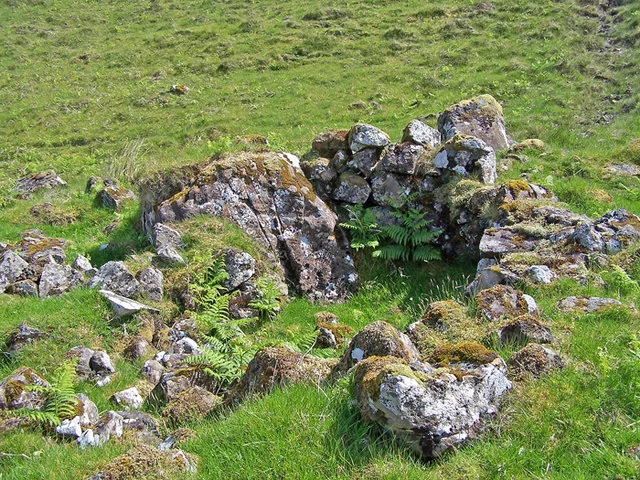

Helgusel separates early grazing from later buildings
Research published in August 2026 examines Helgusel in southwest Iceland using pollen, sediments, volcanic ash chronology, plant remains, and insects. The study detects grazing around AD 950, centuries before the excavated shieling buildings appear to have been established. The main structural occupation belongs to the thirteenth century and later, rather than automatically to the settlement or Viking Age.
This distinction prevents the site's later evidence from being pushed backward without justification. Marine provisions and equipment recovered from occupation layers illuminate the inhabitants represented by those layers, not necessarily the people responsible for the earliest grazing signal. The site nevertheless offers a valuable long view. It shows that a location could be used before its surviving buildings were constructed, and that more formal occupation may represent a change in management rather than the first human interest in the area.
Sources for this section: 1
Haymaking could be the main reason for an outfield base
Lisbeth Prøsch-Danielsen's comparison of two areas in southwestern Norway emphasizes haymaking rather than treating every shieling primarily as a dairy station. The study compares an inner-fjord environment with a coastal heathland plateau. It traces use for haymaking to the Viking Age or early medieval period while identifying much later phases as especially important for visible hay-stacking arrangements.
The comparison broadens what seasonal movement could accomplish. A temporary base might support harvesting winter fodder as well as summer grazing and milk processing. It also cautions against dating every visible feature to the earliest activity at a site. Storage arrangements changed, and surviving structures can belong to later intensification. A landscape with a long pastoral history is not necessarily a landscape in which the same buildings, techniques, and balance of tasks persisted unchanged from the beginning.
Sources for this section: 3
Later Greenland shows why the system could be reorganized
A study of Norse Greenland discusses changes in settlement and resource use during the medieval centuries after the initial colonization. It describes a movement toward greater concentration in inner-fjord areas from the thirteenth century, with some more distant or less productive upland and outer-fjord locations abandoned. Access to pasture, winter fodder, and shared labor forms part of the explanation.
These later developments should not be presented as a direct snapshot of tenth-century practice. They demonstrate that a farming system could be reorganized as environmental and social conditions changed. A distant resource remained useful only if its yield justified the labor and access costs. Changes in productivity could therefore alter the value of a site without making its earlier use irrational. Greenland provides a comparative example of adjustment over time, not a single formula that can be applied to every Scandinavian or North Atlantic farm.
Sources for this section: 4
Seasonal movement required knowledge as well as paths
The different studies show why the phrase summer pasture can conceal several arrangements. Some areas show grazing before buildings, some emphasize hay production, and some were repeatedly expanded, abandoned, or reused. The permanent farm and its outlying resources need to be reconstructed as a connected system, while each phase is dated on its own evidence.
As a practical inference, people moving through that system needed to judge when animals could travel, which ground would support them, and how work at the outlying site fitted with tasks at home. They also needed arrangements for access and cooperation, although the exact rules are not recoverable at every archaeological location. The most informative reconstruction therefore avoids a picturesque procession detached from farm management. Seasonal movement was work directed toward maintaining animals and households across a changing year, and its organization varied with terrain, resources, and historical circumstances.
Sources for this section: 2, 3, 4
For the introductory context, read Farming and Livestock: Work Behind the Voyages.
The Evidence
The sources below support this article. Interpretations and limits are explained in the text; this is not an exhaustive research review.
- Thorlacius and colleagues 2026: Helgusel environmental archaeology, published August 10 ↗
- Dahle, Mehl and Hjelle 2026: Transhumance in Møre and Romsdal, published May 3 ↗
- Prøsch-Danielsen 2022: Haymaking and shieling use in southwestern Norway ↗
- Jackson and colleagues 2018: Adaptation and Norse Greenland settlement ↗