
A Norse story · 2 min read
Thor keeps Alvis talking
A contest won by waiting for dawn
A dwarf comes to claim a bride, and Thor answers with an apparently endless examination of names.
The disputed promise
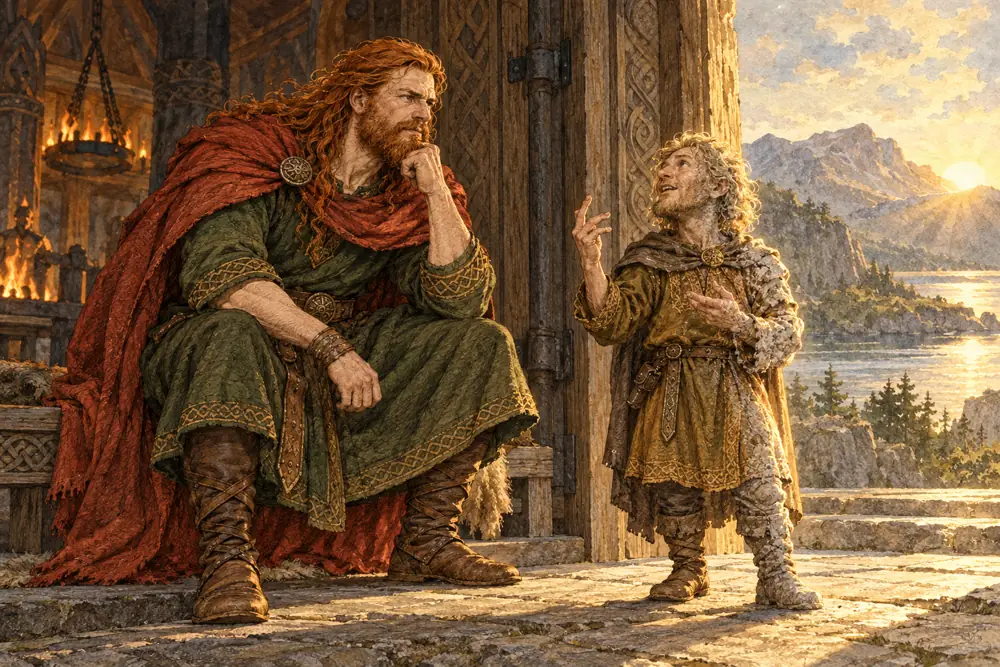
Alvíssmál begins with the dwarf Alvis expecting to take a bride home. Thor challenges his claim and says that the promise was made while he was away. As the woman’s father, he refuses to accept the arrangement. The poem does not name her. Identifying her as Thrud is a reasonable connection with Thor’s known daughter elsewhere, but it should remain an identification made across sources rather than a name spoken in this dialogue.
Words from many worlds
Instead of reaching immediately for his hammer, Thor proposes a test. Alvis must say what familiar things are called among different kinds of beings. Earth, sky, moon, sun, clouds, wind, fire and other subjects become the occasion for long lists of names. Gods, humans, giants, elves, dwarfs and the dead do not necessarily use the same terms. Alvis answers confidently. On the surface he is succeeding, and the poem offers its audience a display of poetic vocabulary as well as a contest.
The question that time answers
The questions continue until morning. Thor then praises the amount of knowledge Alvis possesses, but reveals that the questioning was a trick: daylight has caught the dwarf. The concluding announcement of sunlight makes the danger clear without describing a long transformation scene. Modern retellings commonly say that he turns to stone. That is the conventional interpretation of the ending, not a detailed action narrated in the poem’s final lines.
Knowledge without awareness
Alvis knows the names of the world but fails to notice what is happening around him. Thor wins through timing and deception rather than superior answers. The result complicates the popular contrast between a simple, muscular Thor and the clever gods around him. It also leaves the proposed bride largely outside the conversation: the men argue over a marriage promise, while her wishes are not recorded. A careful modern retelling can acknowledge that absence without inventing dialogue for her. The surviving poem is a verbal duel, and its strength lies in the moment the impressive performance becomes a trap.
Read behind the retelling
Sources & limits
Thor’s daughter is unnamed here. The final verse says dawn has caught Alvis; the familiar petrification is an interpretation of that ending.
Retold in contemporary English. Dialogue is summarized, not presented as a translation. How to read our sources and versions.
Another thread to follow
4 min read
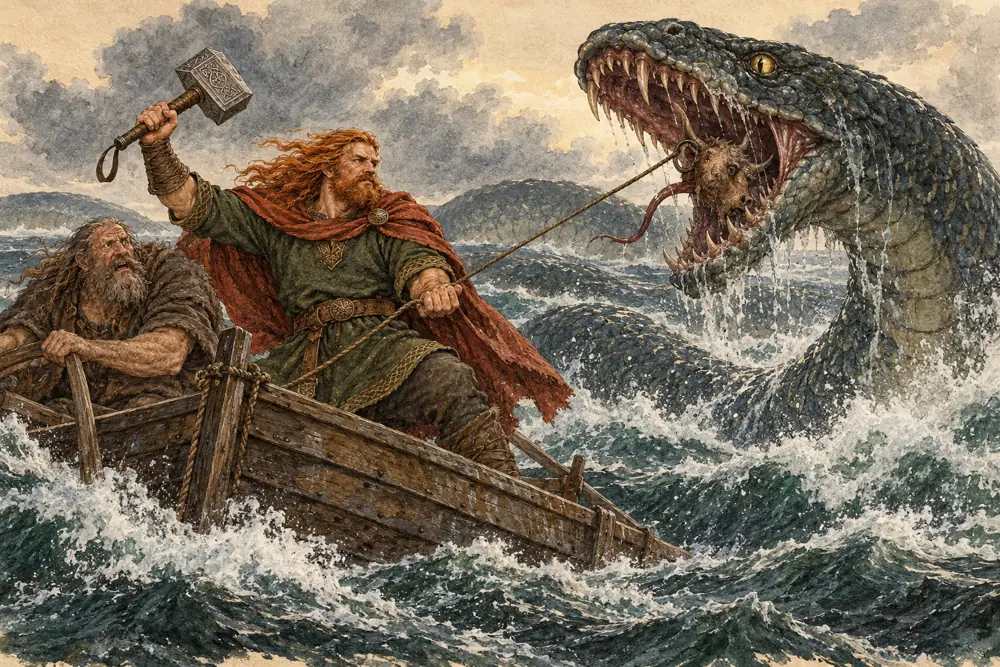
Thor’s fishing expedition
Thor rows beyond the usual fishing grounds with Hymir and hooks Jörmungandr. The surviving accounts do not agree on every detail.
Read the story ↗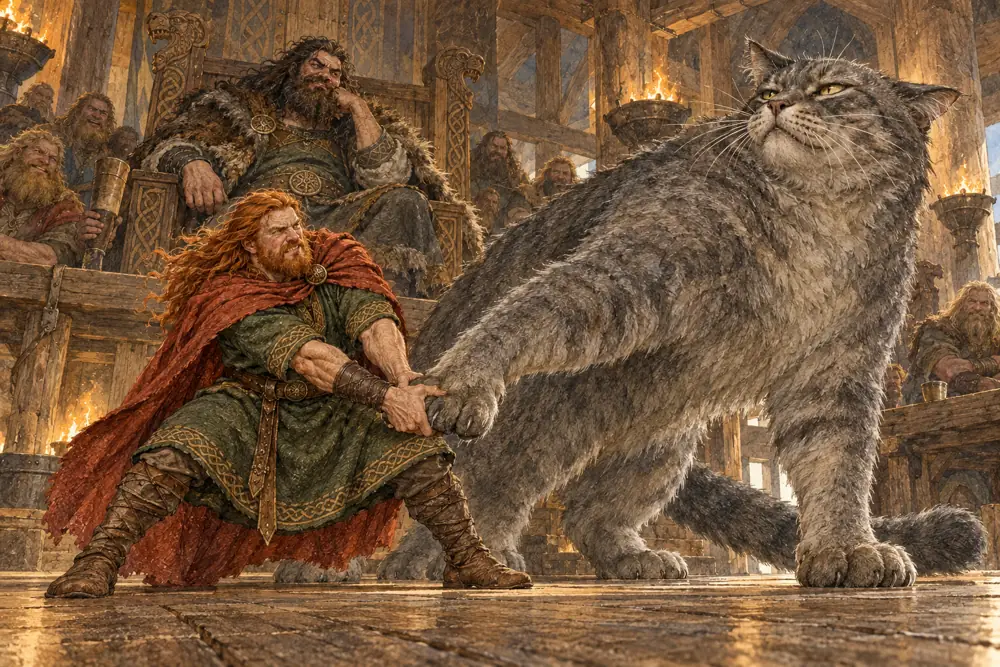
4 min read
Thor at Útgarða-Loki’s hall
Thor and his companions fail a series of apparently simple tests—until their host reveals what they were really facing.
Read the story ↗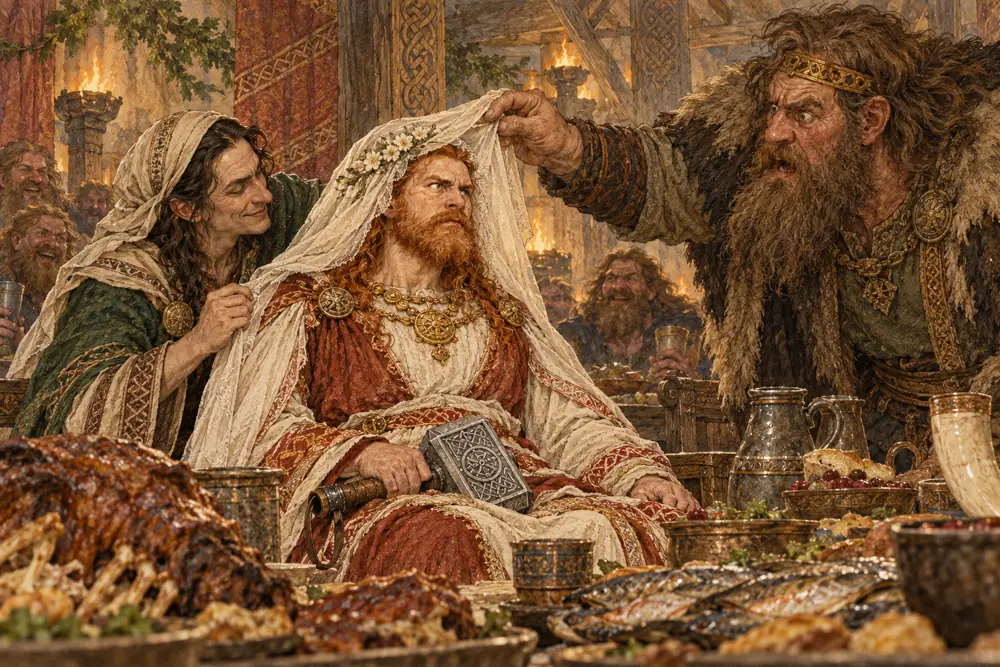
2 min read
Thor’s extraordinary wedding
When Thrym demands Freyja in exchange for Mjölnir, the gods send a very different bride.
Read the story ↗