
A Norse story · 2 min read
Thor, Gróa and Aurvandil’s toe
A piece of good news leaves a stone in Thor’s head
A healer almost removes Thor’s wound, until his attempt to reward her interrupts the cure.
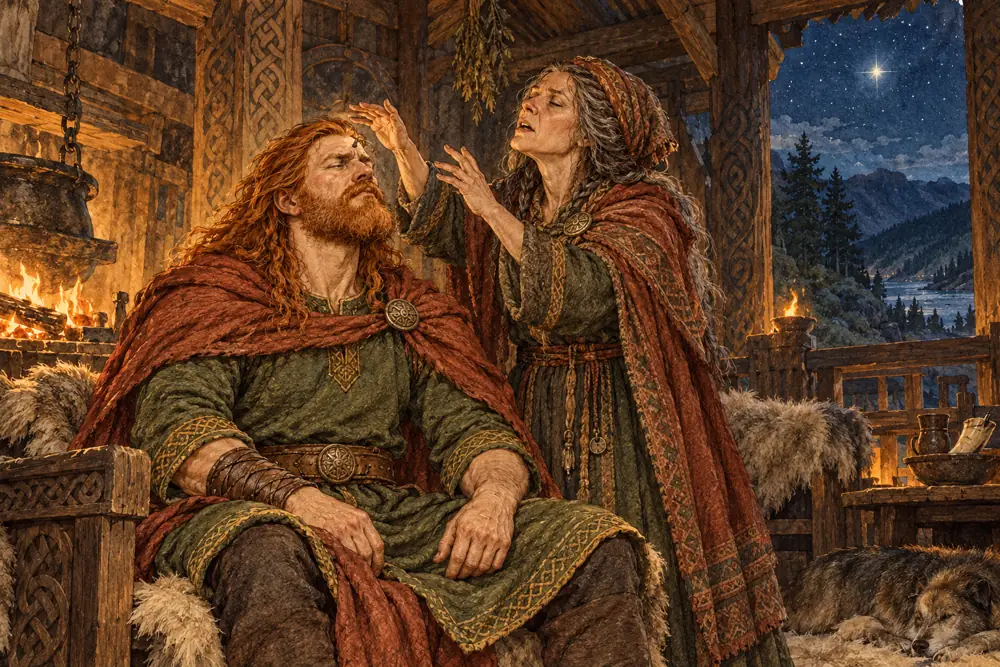
After the duel
Thor has survived his confrontation with the giant Hrungnir, but victory has left a fragment of the giant’s whetstone lodged in his head. Back at Thrudvangar, he receives help from Gróa, a woman skilled in healing spells. She sings over the wound and the fragment begins to loosen. The episode changes the scale of Thor’s adventure. The powerful fighter who defeats giants now needs another person’s specialised knowledge to remove a painful piece of stone.
A husband carried home
Thor wants to repay Gróa and make her happy. He tells her that he has encountered her husband, Aurvandil the Bold, and carried him in a basket on his back from the north. They crossed a freezing river on the journey. One of Aurvandil’s toes protruded from the basket and became frostbitten. Thor broke it off and threw it into the sky, where it became the star called Aurvandil’s Toe. He adds that Gróa can expect her husband’s return.
Joy interrupts the spell
The news makes Gróa so happy that she forgets the incantations. The whetstone fragment remains in Thor’s head. Good intentions have defeated their own purpose: by trying to reward the healer before her work is finished, Thor prevents the cure. Skáldskaparmál adds that throwing a whetstone across the floor is forbidden because it disturbs the stone in Thor’s head. In that explanation, an ordinary household object retains a connection with the god’s unfinished injury.
What the short account leaves open
The prose gives no full account of why Aurvandil was in the north or how the frostbite affected the rest of his life. It also does not securely identify the star with a modern astronomical object. Names and motifs can invite comparisons with other traditions, but a comparison is not the missing chapter of this story. Gróa’s skill, Thor’s gratitude and the interruption are enough to make a complete small narrative within the larger Hrungnir episode. They show the god as helpful and vulnerable, with a victory that does not erase its bodily consequences.
Read behind the retelling
Sources & limits
The star’s modern identification is uncertain. Do not automatically equate this Gróa with every similarly named figure elsewhere in Old Norse literature.
Retold in contemporary English. Dialogue is summarized, not presented as a translation. How to read our sources and versions.
Another thread to follow
4 min read
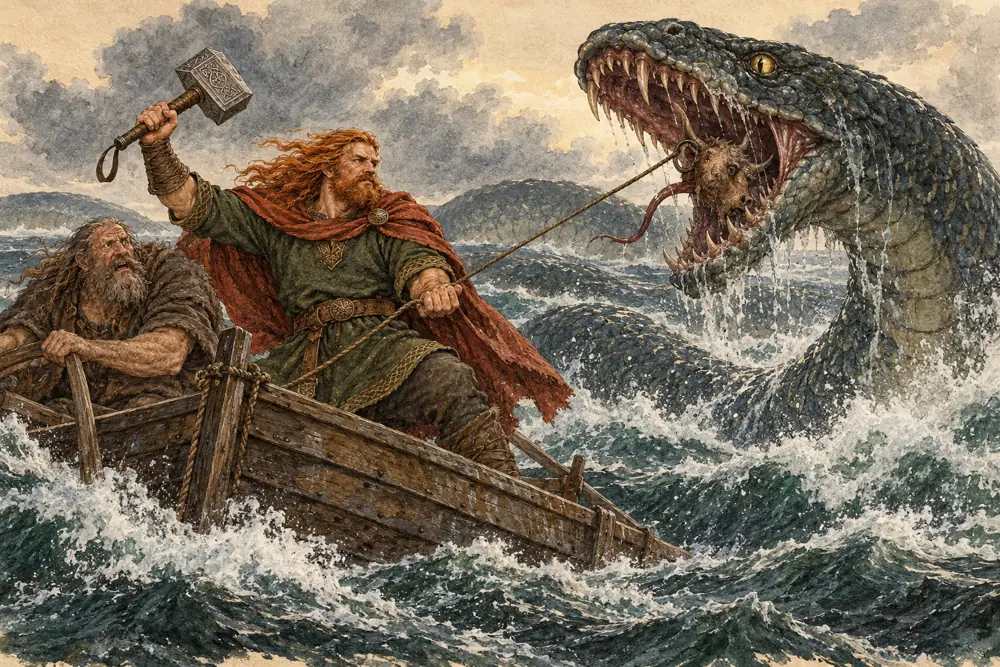
Thor’s fishing expedition
Thor rows beyond the usual fishing grounds with Hymir and hooks Jörmungandr. The surviving accounts do not agree on every detail.
Read the story ↗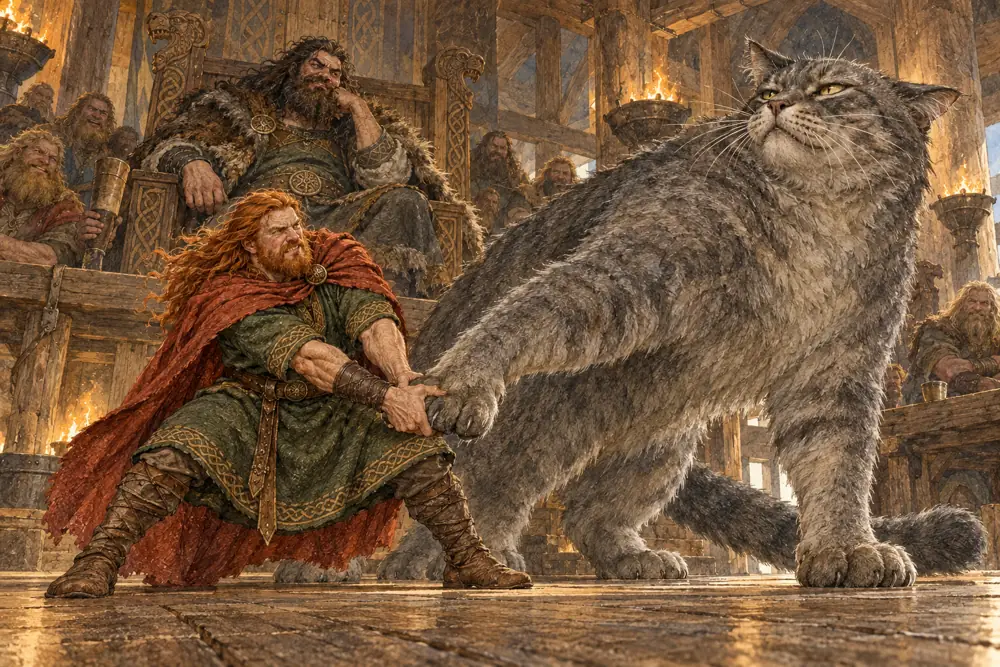
4 min read
Thor at Útgarða-Loki’s hall
Thor and his companions fail a series of apparently simple tests—until their host reveals what they were really facing.
Read the story ↗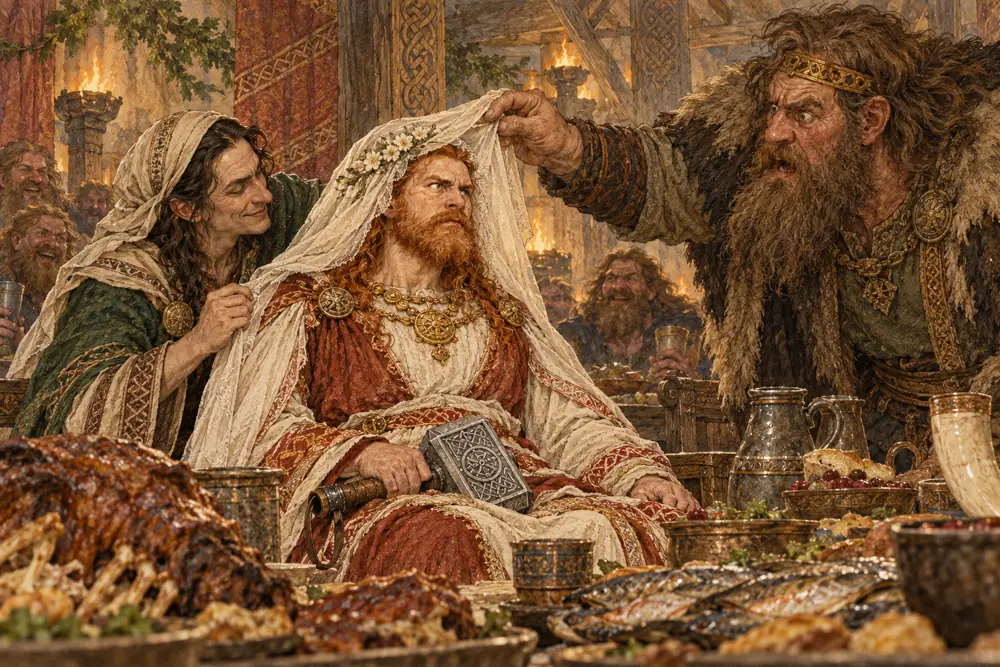
2 min read
Thor’s extraordinary wedding
When Thrym demands Freyja in exchange for Mjölnir, the gods send a very different bride.
Read the story ↗