

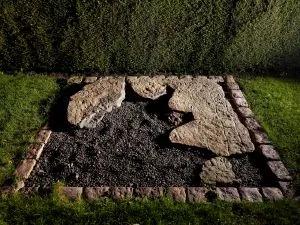
Denmark · DR 386 · Runic grave slab
Vestermarie 4 runestone ↗
1050–1150; early medieval grave marker
The damaged inscription names Svend, Tole and Vefrid and says they lie beneath the stone.
A map of memory
Explore well-documented stones and the people remembered on them. Choose a map marker or a photograph to read the story.
This is a curated selection of runestones, inscribed stone crosses and related rock inscriptions, including monuments from before and after the Viking Age. Anglo-Saxon and Norse traditions are identified separately. Each page distinguishes a readable summary of the inscription from a literal translation.
Country includes entries with a recorded country but no coordinates. Region filters use the displayed map reference point, which may be historical; they do not verify present-day display or visitor access.
Search and filters cover the complete register. Object types follow the existing entry descriptions; missing or uncertain types remain unspecified.
Showing 201–220 monuments · Page 11
Loading the map. Stone pages and documented locations are also available below.
Zoom in to separate nearby stones. Numbered markers group nearby locations. Only entries with documented coordinates have map pins. A pin may mark an earlier recorded position, an original setting or a later display location. Open the entry for the coordinate source and any verified visitor location. Browse the entries ↓
Denmark · DR 386 · Runic grave slab
1050–1150; early medieval grave marker
The damaged inscription names Svend, Tole and Vefrid and says they lie beneath the stone.
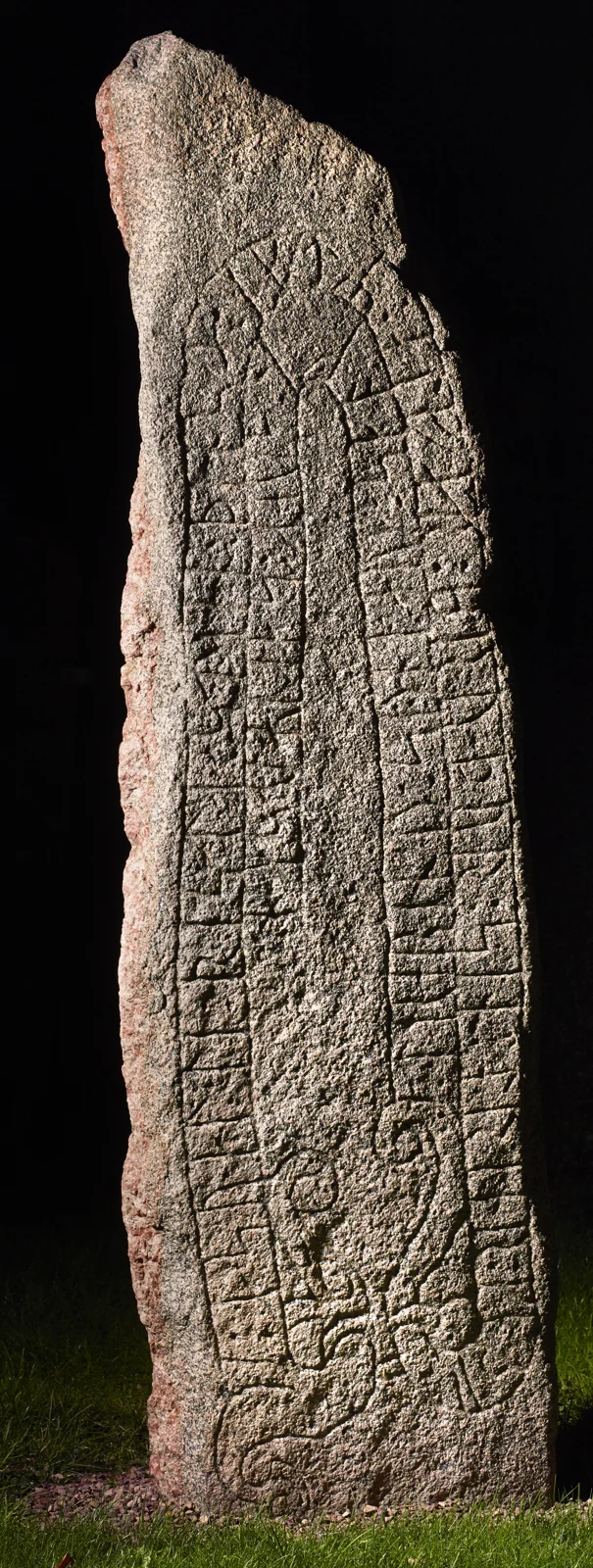
Denmark · DR 387 · Runestone
ca. 1075–1125 in Danske Runeindskrifter; heritage register uses broad Viking Age 750–1066 category
Asvalde commemorates his brother Alver. A passage concerns betrayal by Skoge, but the exact wording and role of a possible carver are disputed.
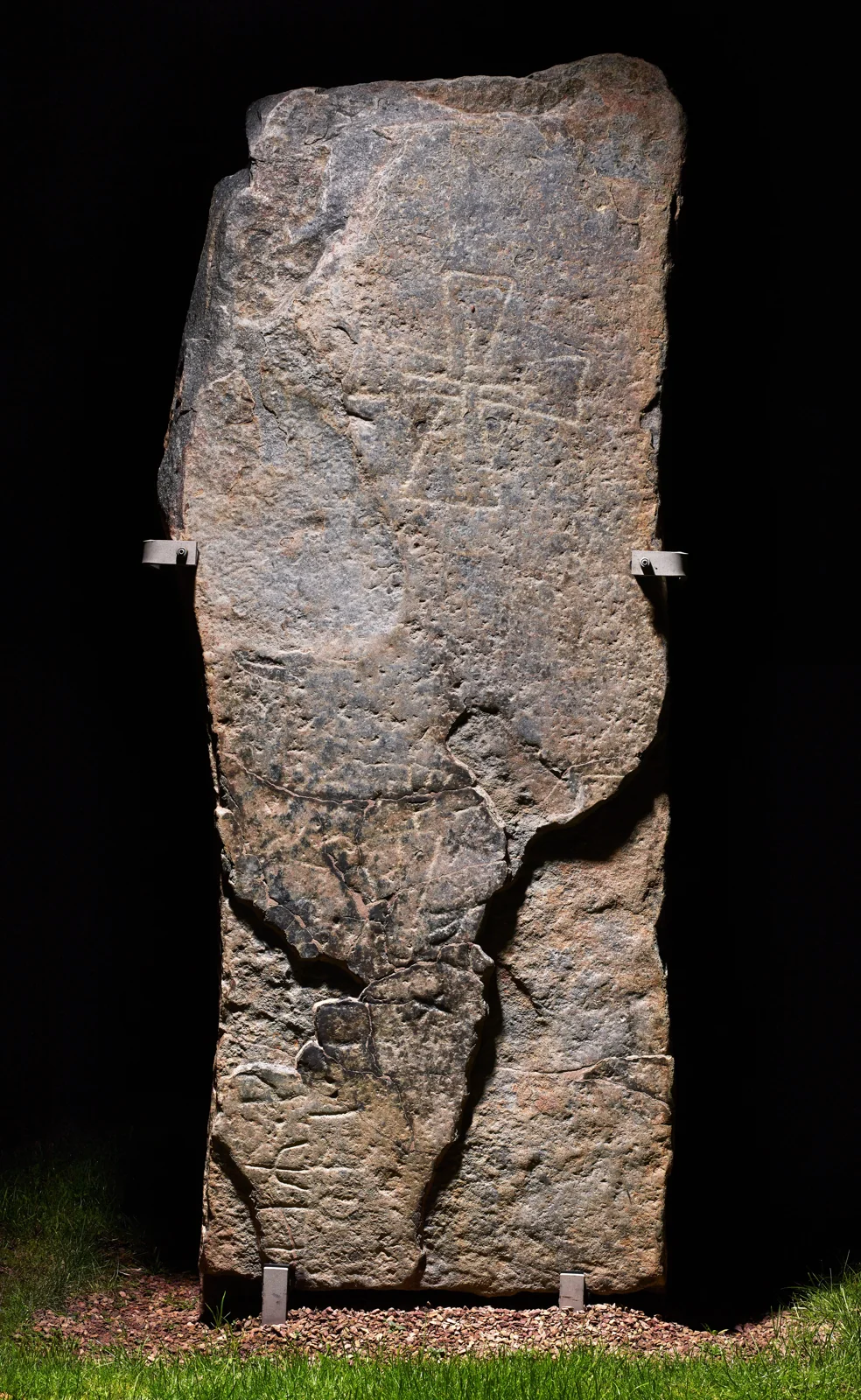
Denmark · DR 388 · Runestone
1025–1125
The surviving inscription is too damaged for a secure connected interpretation.
Denmark · DR 389 · Runestone
1075–1125; late Viking Age/early medieval
A sponsor whose name is incomplete commemorates Svend and his brother, asking Christ to help both souls.
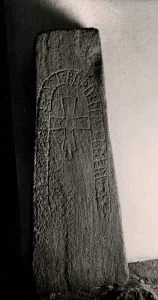
Denmark · DR 397 · Runestone
1025–1075
Thykil or Thorkil commemorates a man whose name and patronymic cannot be read securely.
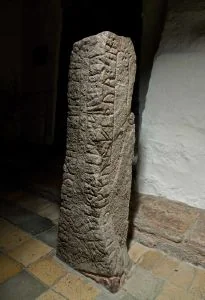
Denmark · DR 398 · Runestone
1025–1075
Broder and Emund commemorate their father Sigmund and invoke Christ, Saint Michael and Saint Mary.
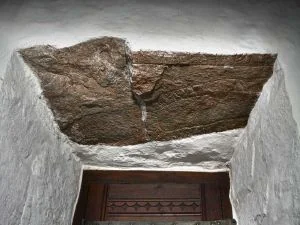
Denmark · DR EM85;343 · Runestone
1075–1125; late Viking Age/early medieval
Arnils and Fulhuge commemorate their brother Thormar; parts of the names are restored.
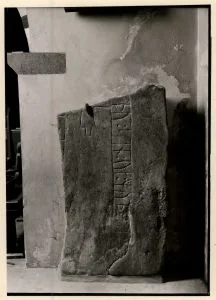
Denmark · DR 409 · Runestone
1025–1075
Only the reference to a father and mother survives clearly.
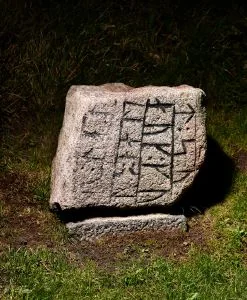
Denmark · DR 408 · Runestone
1025–1125
The fragment retains part of a commissioning formula and a Christian appeal to God and God's mother.
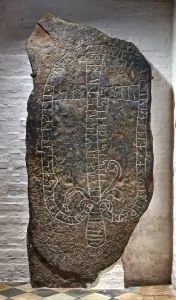
Denmark · DR 379 · Runestone
1075–1125; late Viking Age/early medieval
Sasser commemorates his father Alvard or Halvard, who drowned with the entire ship's company, and asks Christ to help his soul.
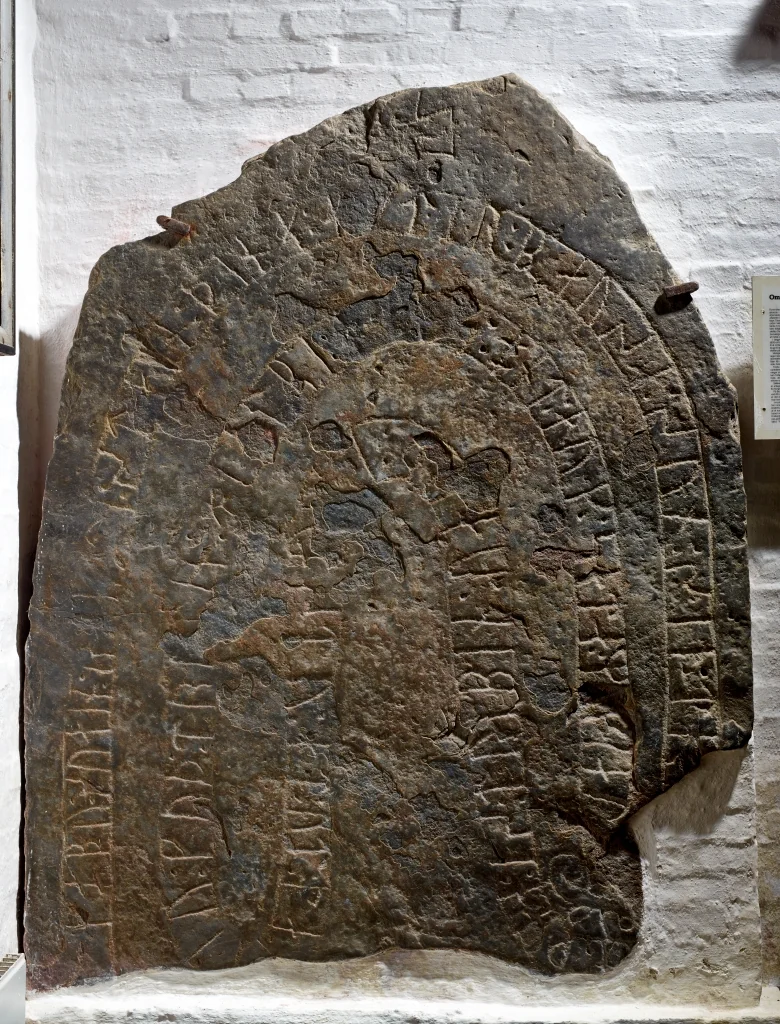
Denmark · DR 380 · Runestone
1075–1125; late Viking Age/early medieval
Kåbe(?)-Svend commemorates son Bøse, described as killed in battle at Utlängan; prayer names God and Michael.
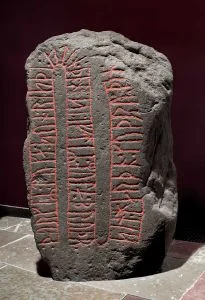
Denmark · DR 121 · Runestone
Viking Age; precise dating varies
Thorger, Toke's son, commemorates his brother Mule, described as a very good thegn.
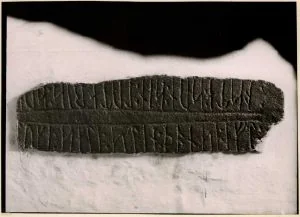
Denmark · DR 145 · Runestone
Viking Age; precise dating varies
A sponsor possibly named Toke commemorates his son Asti; the sponsor's own patronymic is unclear.
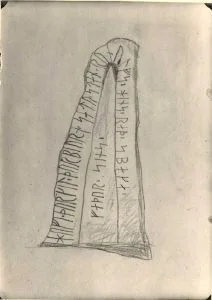
Denmark · DR 161 · Runestone
Viking Age; precise dating varies
Hove, Thorkil and Thorbjørn commemorate their father Runulv, whose epithet praises his skill in counsel.
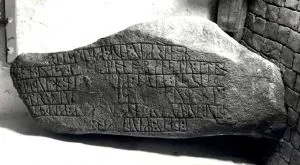
Denmark · DR 133 · Runestone
Viking Age; precise dating varies
Thyra and her sons Odinkar and Gudmund commemorate a man whose name is incomplete, praising him among Denmark's landmænd.
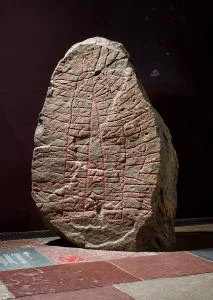
Denmark · DR 107 · Runestone
Viking Age; precise dating varies
Alfkel and his sons commemorate their relative Manne, described as a land-manager serving Keld the Norwegian.
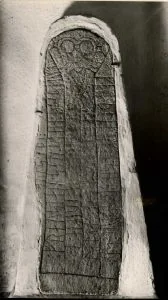
Denmark · DR 62 · Runestone
Viking Age; precise dating varies
Frøsten commemorates his companion Gyrd, Sigvalde's brother. The damaged continuation cannot be translated confidently.
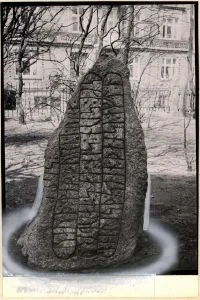
Denmark · DR 117 · Runestone
Viking Age; precise dating varies
Åne commemorates his son Eskil, who died with Thore in the Øresund.
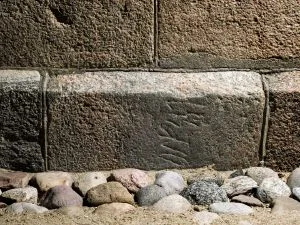
Denmark · DR 70 · Runestone
700–900, tentative
The brief surviving text identifies Ulf's stone.
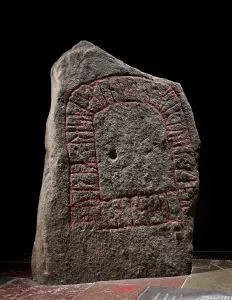
Denmark · DR 122 · Runestone
Viking Age; precise dating varies
Thore commemorates his father Gunner.
No monuments match. Try another name or reset the filters.
Missing or disputed words can change an inscription’s meaning. Our summaries explain the message without inventing missing passages. Names and dates may appear differently in other editions.
Photographs retain their individual licenses; credits appear beside every image. Where no photograph is available, the entry links to its documentary source. Location and historical sources are linked on each stone page.
Entries have individual source-review dates; the latest entries were reviewed November 11, 2026. Map: © OpenStreetMap contributors. Report a base-map issue ↗
Keep exploring
Region sources (reviewed 2 November 2026): Klimadatastyrelsen / SDFI — DAGI, retrieved 2026-11-02; point classifications derived by Nordic Viking History · CC BY 4.0; Klimadatastyrelsen / SDFI — DAGI, retrieved 2026-11-14; point classifications derived by Nordic Viking History · CC BY 4.0; © Kartverket · CC BY 4.0. Swedish counties: Statistics Sweden, RegSO 2025 (CC0).


