Explore well-documented stones and the people remembered on them. Choose a map marker or a photograph to read the story.
This is a curated selection of runestones, inscribed stone crosses and related rock inscriptions, including monuments from before and after the Viking Age. Anglo-Saxon and Norse traditions are identified separately. Each page distinguishes a readable summary of the inscription from a literal translation.
Country includes entries with a recorded country but no coordinates. Region filters use the displayed map reference point, which may be historical; they do not verify present-day display or visitor access.
Search and filters cover the complete register. Object types follow the existing entry descriptions; missing or uncertain types remain unspecified.
Showing 181–200 monuments · Page 10
Loading the map. Stone pages and documented locations are also available below.
Zoom in to separate nearby stones. Numbered markers group nearby locations. Only entries with documented coordinates have map pins. A pin may mark an earlier recorded position, an original setting or a later display location. Open the entry for the coordinate source and any verified visitor location. Browse the entries ↓
A verified photograph is not yet available for this entry.
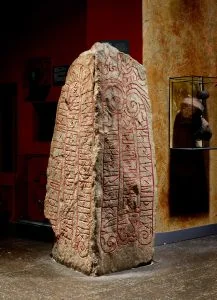
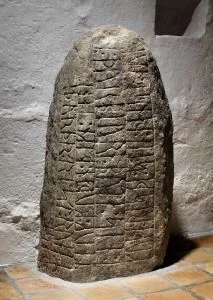
Thorleif Hnakki commemorates his son Fiacc; the text also mentions Fiacc’s relationship to Haf. Another short text names Jesus using mixed letter forms.
A verified photograph is not yet available for this entry.
Several inscription phases: Viking-Age texts and medieval section D, probably twelfth century; broader whole-object catalogue dates differ
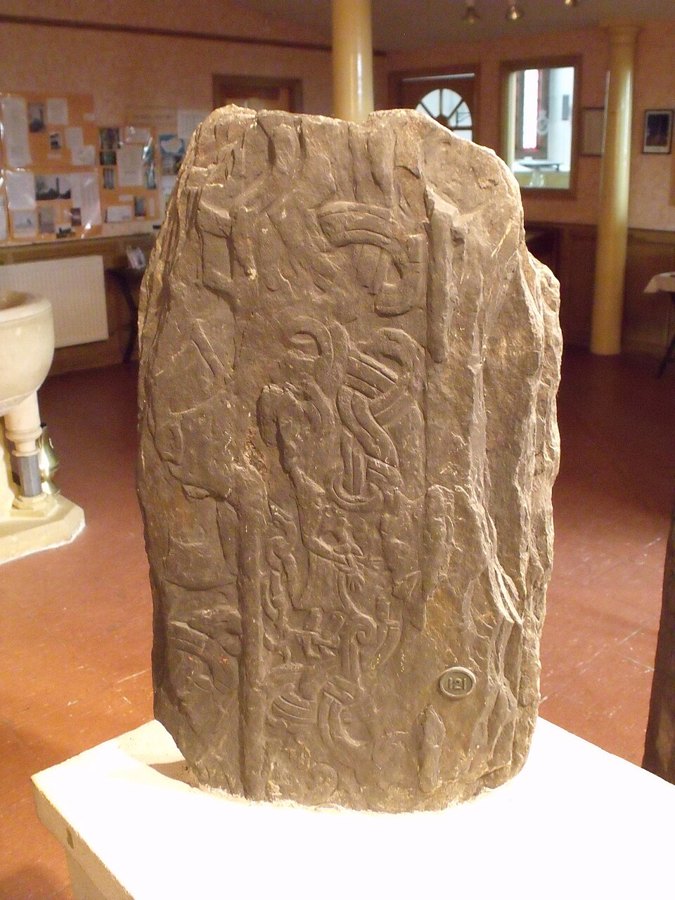
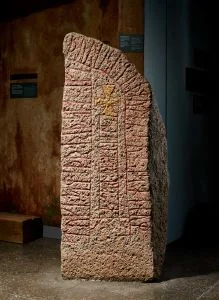
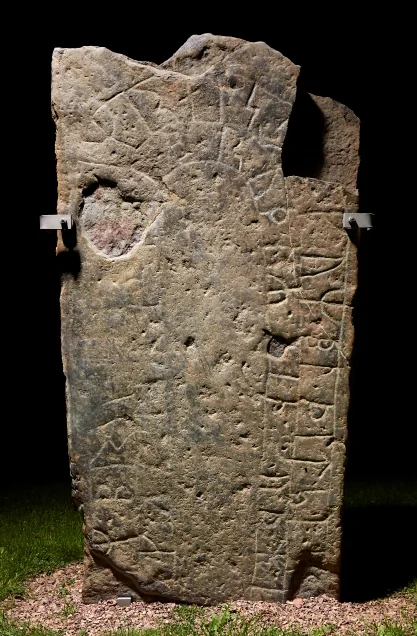
Several hands added inscriptions to an older cross. The texts include a wife’s memorial, the name Myrgjǫl, Christian wording and Thorid’s carver statement; Runor dates section D separately as probably twelfth century.
Cross 121 at Andreas, Isle of Man: side B shows narrative carving traditionally associated with Gunnar and the serpents. This view does not show a readable runic inscription.Image: Malost · CC BY-SA 3.0
Viking Age in Runor without an individual date; the broad RuneS interval and Manx National Heritage model tag do not resolve the dating
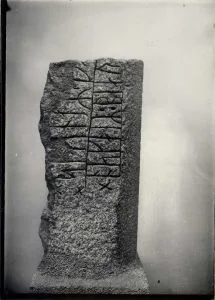
Only a few runic traces survive. They do not allow a connected translation, so the carved Sigurd story must not be presented as a translation of the runes.
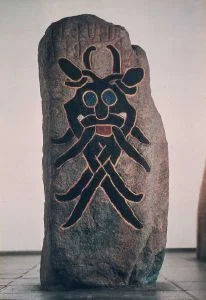
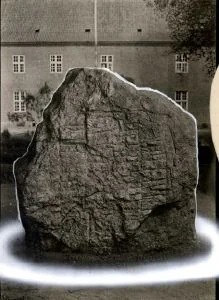
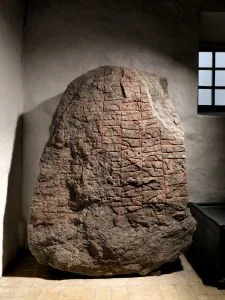
Toke commemorates Ebbe, his stepfather or relative by marriage, and his mother Tove. The text says both lay in the mound and that Ebbe left Toke his property.
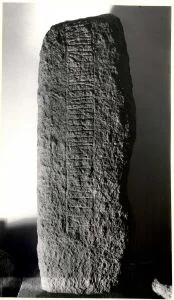
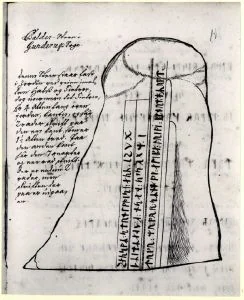
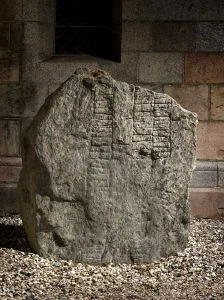
Gilling commemorates a person whose name is lost, probably his brother, and asks God to help his soul.
No monuments match. Try another name or reset the filters.
Reading the evidence
Missing or disputed words can change an inscription’s meaning. Our summaries explain the message without inventing missing passages. Names and dates may appear differently in other editions.
Photographs retain their individual licenses; credits appear beside every image. Where no photograph is available, the entry links to its documentary source. Location and historical sources are linked on each stone page.