

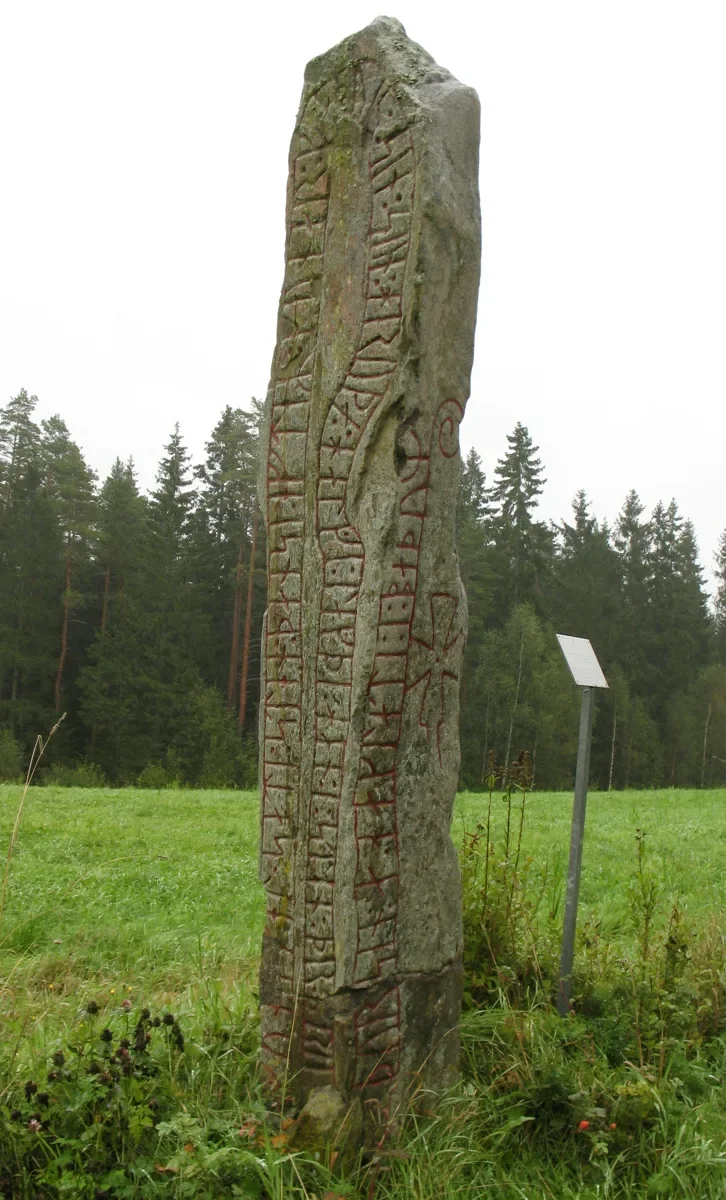
Sweden · Sm 101
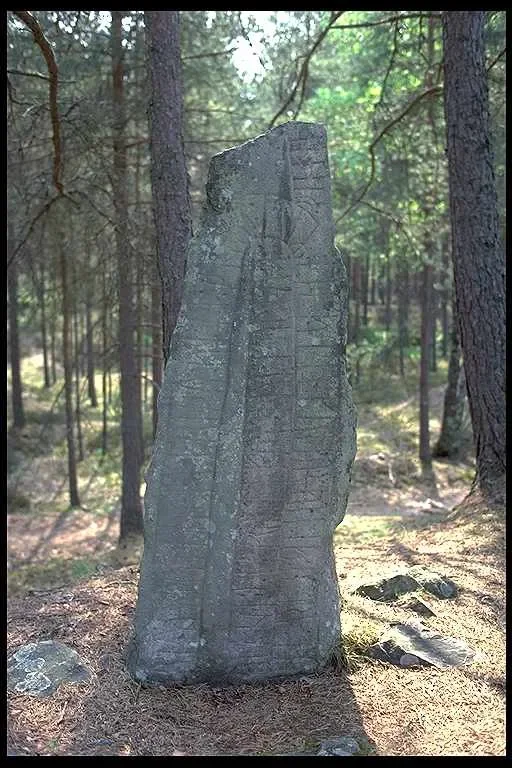
Nävelsjö runestone ↗
Viking Age (style-based dating)
Gunnkel honours his father Gunnar, son of Rode. Gunnar died abroad, and his brother Helge placed him in a stone coffin at Bath in England.
A map of memory
Explore well-documented stones and the people remembered on them. Choose a map marker or a photograph to read the story.
This is a curated selection of runestones, inscribed stone crosses and related rock inscriptions, including monuments from before and after the Viking Age. Anglo-Saxon and Norse traditions are identified separately. Each page distinguishes a readable summary of the inscription from a literal translation.
Country includes entries with a recorded country but no coordinates. Region filters use the displayed map reference point, which may be historical; they do not verify present-day display or visitor access.
Search and filters cover the complete register. Object types follow the existing entry descriptions; missing or uncertain types remain unspecified.
Showing 141–160 monuments · Page 8
Loading the map. Stone pages and documented locations are also available below.
Zoom in to separate nearby stones. Numbered markers group nearby locations. Only entries with documented coordinates have map pins. A pin may mark an earlier recorded position, an original setting or a later display location. Open the entry for the coordinate source and any verified visitor location. Browse the entries ↓
Sweden · Sm 101
Viking Age (style-based dating)
Gunnkel honours his father Gunnar, son of Rode. Gunnar died abroad, and his brother Helge placed him in a stone coffin at Bath in England.
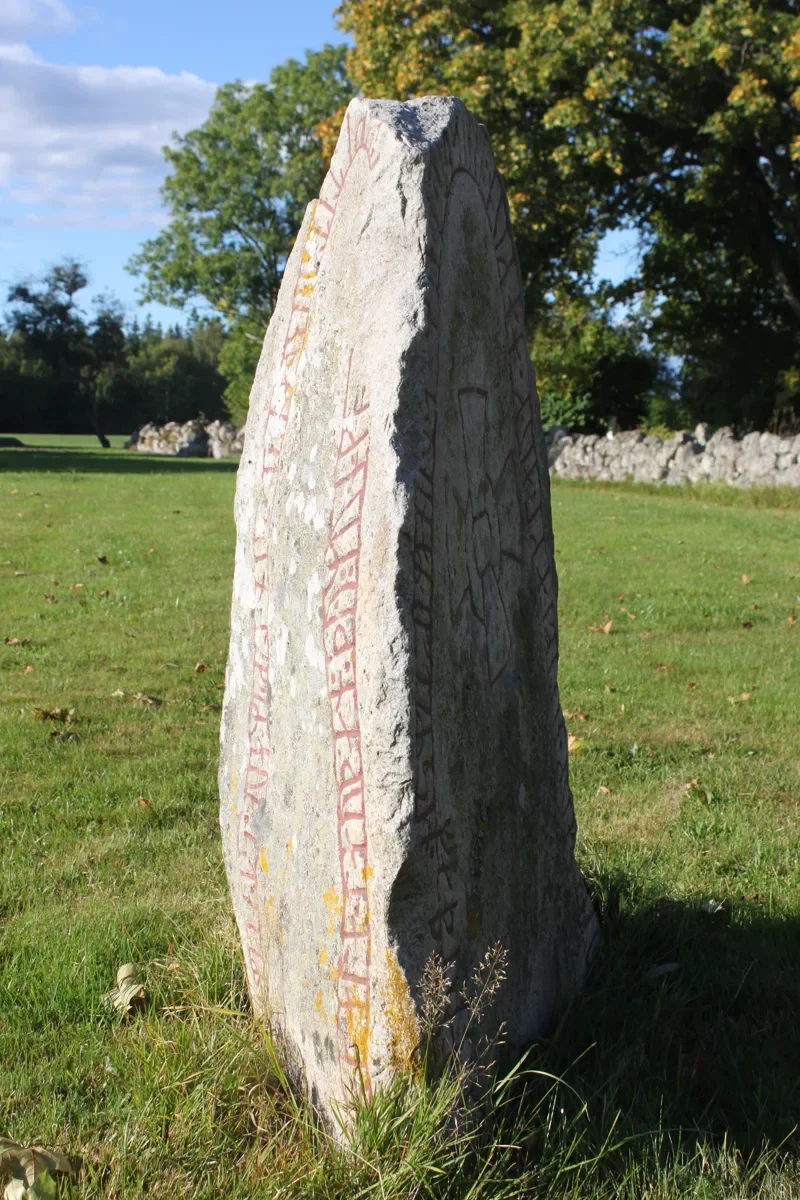
Sweden · Sm 16
Viking Age (style-based dating)
Four sons—Rosten, Eliv, Åke and Håkan—honour their father Kale. The closing thought links his enduring reputation with the survival of the carved stone and its runes.
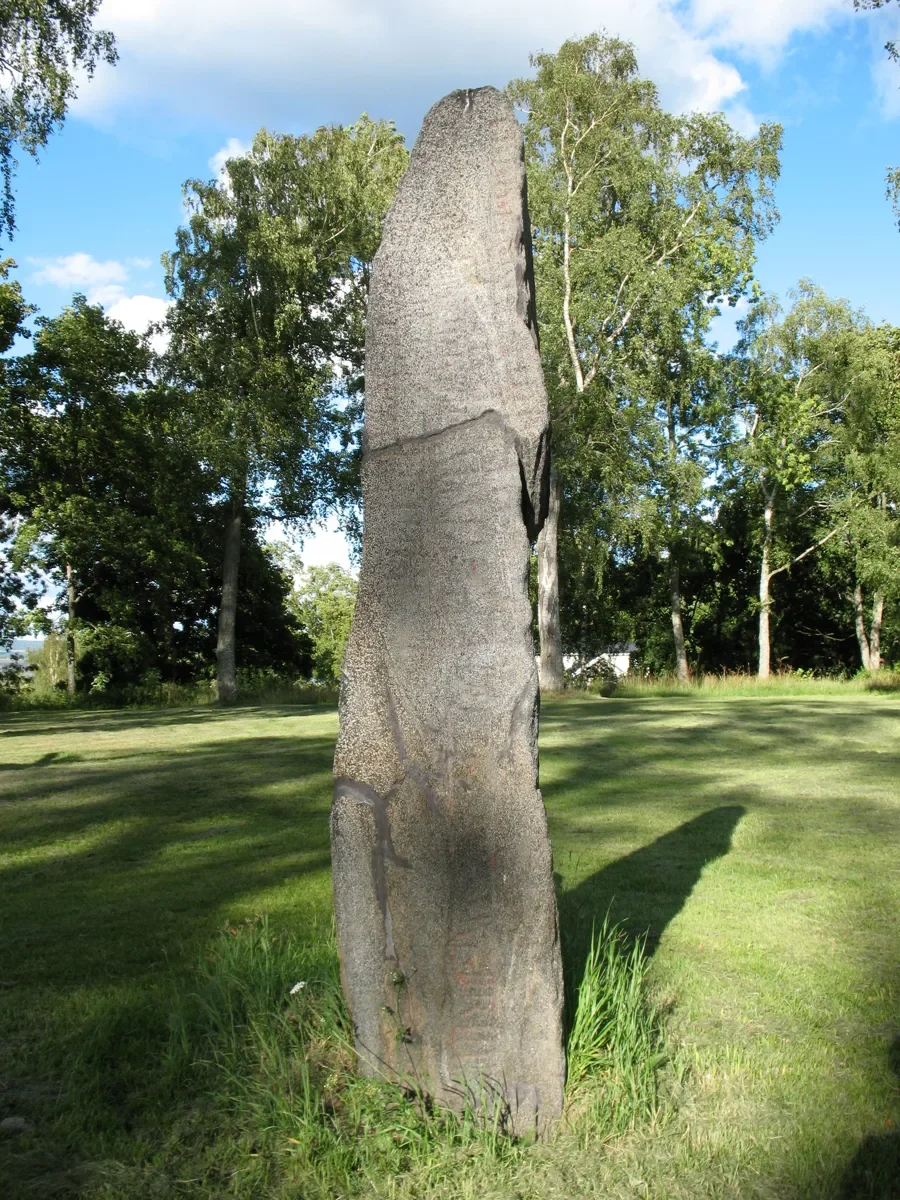
Sweden · Vg 67
Viking Age (style-based dating)
Frösten commemorates his wife Tora and praises her exceptional standing. The text ends with a curse against anyone damaging the memorial; some words and the precise force of the curse remain disputed.
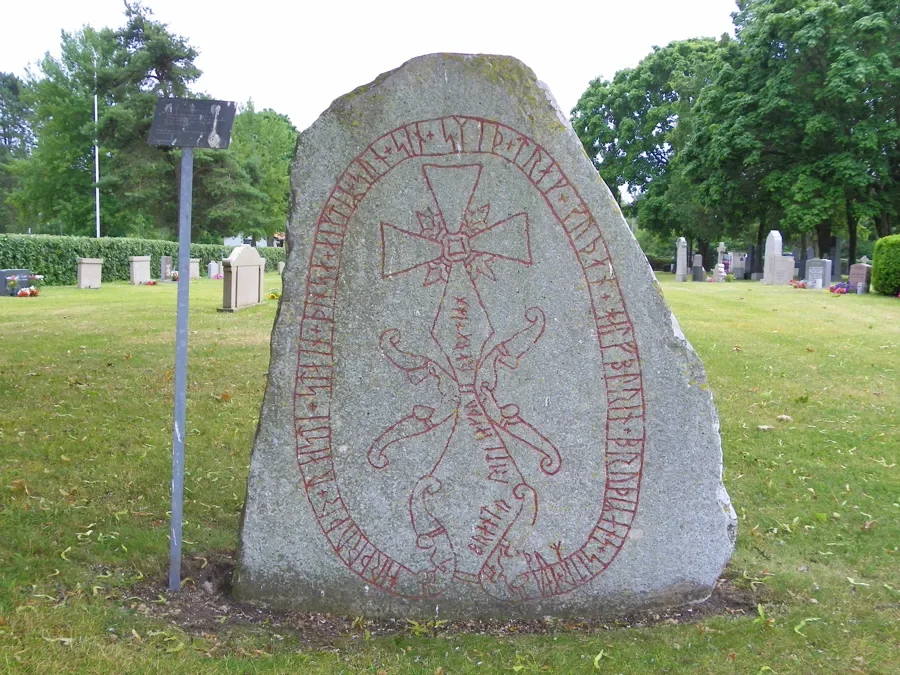
Sweden · Öl 28
Viking Age
Härtrud commemorates her son Smed. His brother is said to be living in Garðar, the eastern realm of Rus. The text also names Brand as carver; the wording involving the brother allows more than one interpretation.
Sweden · Sm 52
Viking Age
Rolf and Eskil honour their father Livsten. He died near Gårdstånga in Skåne, and his remains were brought to Finnveden.
Sweden · Vg 11
Viking Age (style-based dating)
Tore, bearing the additional name Skorpa, honours his son Kättil.
Sweden · Vg 40
Viking Age (style-based dating)
Torkel honours his son Gunne, who died in a battle involving kings. The stone does not identify the battle by name.
Sweden · Vg 62
Viking Age (style-based dating)
Utlage commemorates Öjvind, praising him with the title thegn. The inscription does not state their family relationship.
Sweden · Vg 118
Eleventh century
Rannvig commissioned the memorial for Svennung, her husband.
Sweden · Ög 64
Viking Age (style-based dating)
A group commemorates Grep, son of Judde, describing him as their guild-brother. Love is credited with carving the runes.
Sweden · Ög 155
Eleventh century
A commissioner read as Thorfrid or Thorfred commemorated two sons, Asgaut and Gauti. Gauti is specifically said to have died with Ingvar’s force; this is not expressly stated for Asgaut.
Sweden · Vg 59
Viking Age (style-based dating)
Four sons commemorate Fot, their father, praising him as a thegn. Åsa is also celebrated for the exceptional memorial she made for her husband. The carving names Hjälm and Hjalle.
Sweden · Vg 61
Viking Age (style-based dating)
Tola remembers her son Geirr, who died westward on a Viking expedition. The inscription does not name the country.
Sweden · Vg 184
Viking Age (style-based dating)
Gulli, also read Kolli, commemorates his wife’s brothers Ásbjörn and Juli. Both died eastward while with a force or retinue.
Sweden · Sm 76
Viking Age
Tova commemorates her father Vråe, described as a stallare serving Earl Håkon. The title indicates an office in an elite household.
Sweden · Sm 99
Viking Age
Tord and Torbjörn created a bridge in memory of their father, whose name is rendered Verskulv or Uerskulf.
Sweden · Sm 142
Viking Age
Sven commemorates his father. The father’s name is damaged, although its ending -mund can still be read.
Sweden · Sm 10
Viking Age
The memorial honours Gunnar, Grim’s son, and asks God to help his soul. Its damaged opening names Tyke or Toki and includes the designation Viking; readings of the opening differ.
Sweden · Ög 46
Viking Age
Vibern honours Solva, his brother. The concise text identifies a family relationship without explaining the death.
Sweden · Sm 5
Viking Age (style-based dating)
The memorial remembers Ketill, who died in England. His reputation is praised in poetic language.
No monuments match. Try another name or reset the filters.
Missing or disputed words can change an inscription’s meaning. Our summaries explain the message without inventing missing passages. Names and dates may appear differently in other editions.
Photographs retain their individual licenses; credits appear beside every image. Where no photograph is available, the entry links to its documentary source. Location and historical sources are linked on each stone page.
Entries have individual source-review dates; the latest entries were reviewed November 11, 2026. Map: © OpenStreetMap contributors. Report a base-map issue ↗
Keep exploring
Region sources (reviewed 2 November 2026): Klimadatastyrelsen / SDFI — DAGI, retrieved 2026-11-02; point classifications derived by Nordic Viking History · CC BY 4.0; Klimadatastyrelsen / SDFI — DAGI, retrieved 2026-11-14; point classifications derived by Nordic Viking History · CC BY 4.0; © Kartverket · CC BY 4.0. Swedish counties: Statistics Sweden, RegSO 2025 (CC0).





