Explore well-documented stones and the people remembered on them. Choose a map marker or a photograph to read the story.
This is a curated selection of runestones, inscribed stone crosses and related rock inscriptions, including monuments from before and after the Viking Age. Anglo-Saxon and Norse traditions are identified separately. Each page distinguishes a readable summary of the inscription from a literal translation.
Country includes entries with a recorded country but no coordinates. Region filters use the displayed map reference point, which may be historical; they do not verify present-day display or visitor access.
Search and filters cover the complete register. Object types follow the existing entry descriptions; missing or uncertain types remain unspecified.
Showing 101–120 monuments · Page 6
Loading the map. Stone pages and documented locations are also available below.
Zoom in to separate nearby stones. Numbered markers group nearby locations. Only entries with documented coordinates have map pins. A pin may mark an earlier recorded position, an original setting or a later display location. Open the entry for the coordinate source and any verified visitor location. Browse the entries ↓
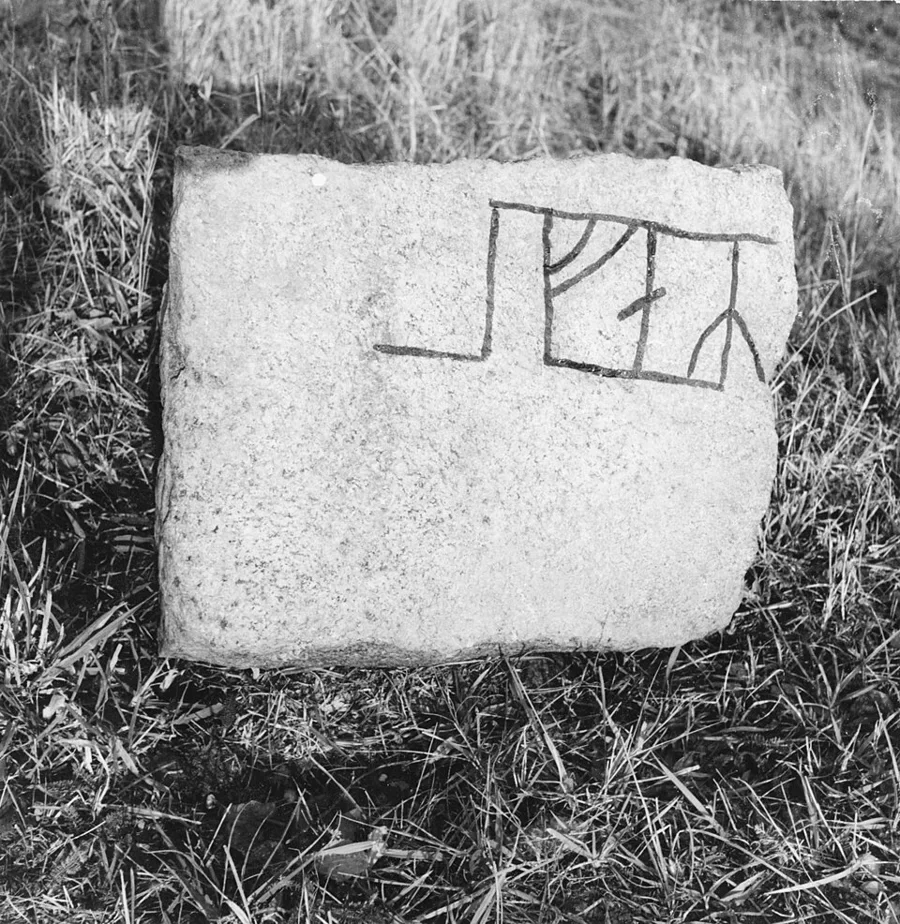
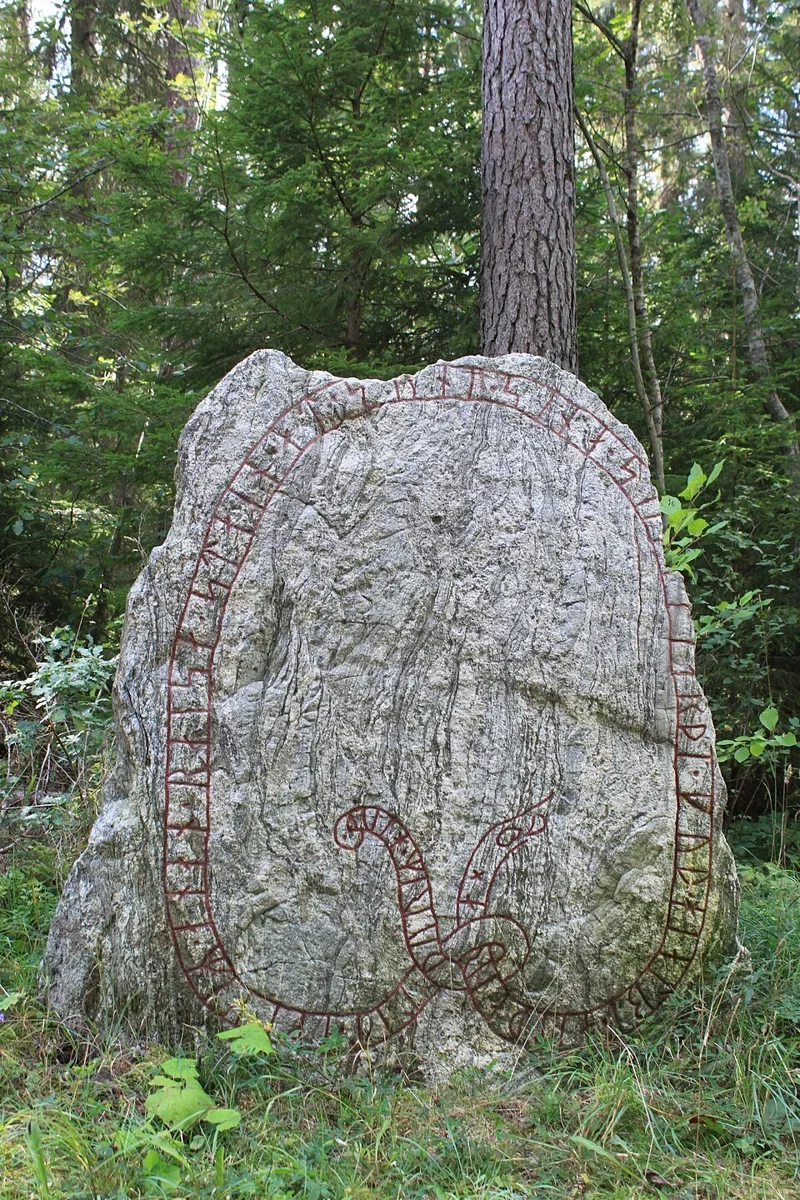
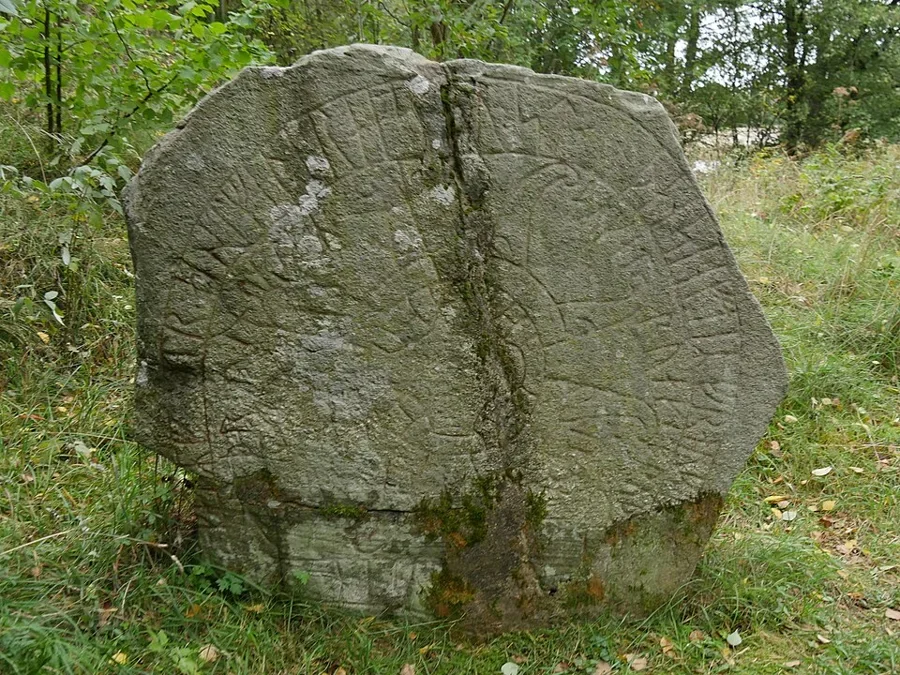
Older records describe Roald and Olev raising the memorial for their father Torer, husband of Aldriv. Only a small part survives, so much of this reading depends on earlier documentation.
Skåäng runestone (Sö 32); photograph of the surviving carved surface.Image: Berig · CC BY-SA 3.0
An earlier Elder Futhark inscription and a separate Viking-Age memorial
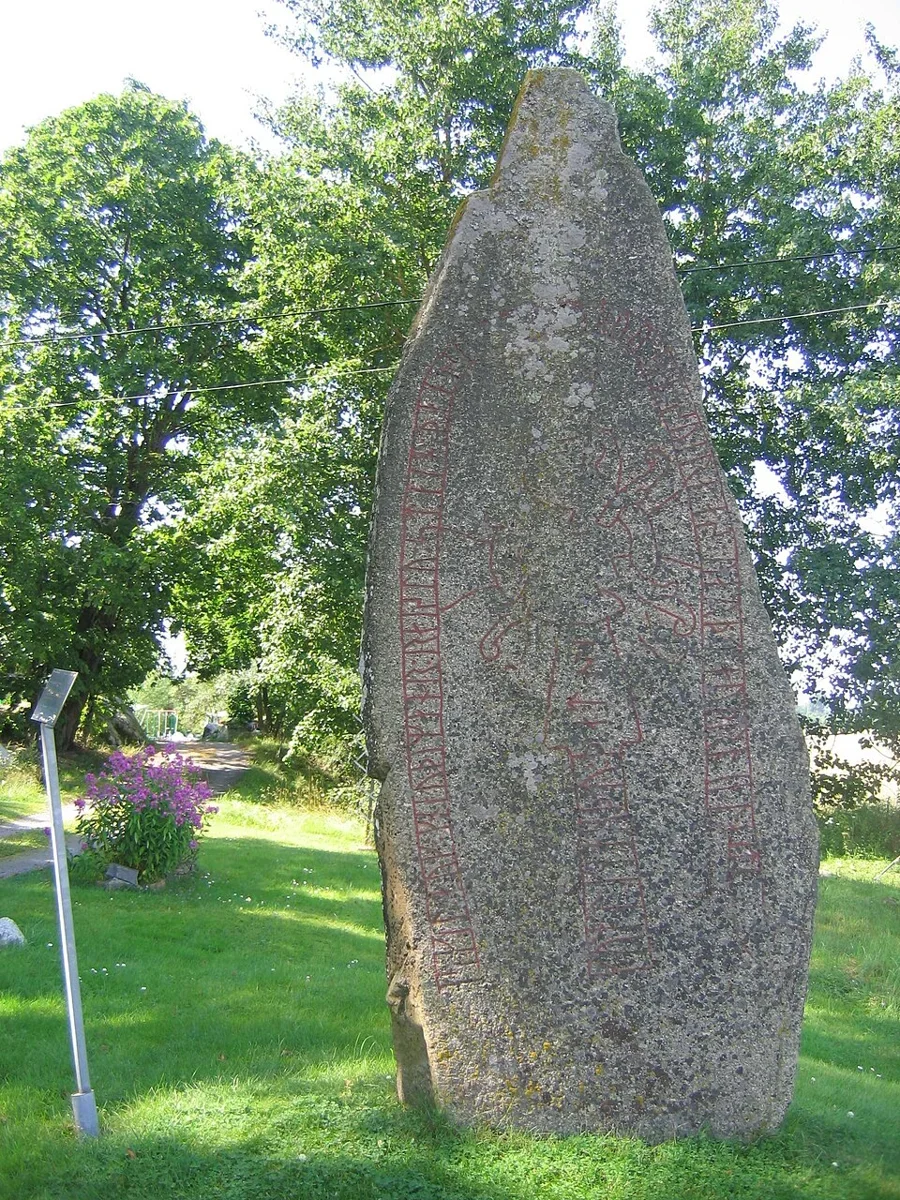
An early inscription uses Elder Futhark and contains difficult personal-name material. A separate Viking-Age text says Skanmals and Olov made the memorial for their father Sven and asks God to help his soul.
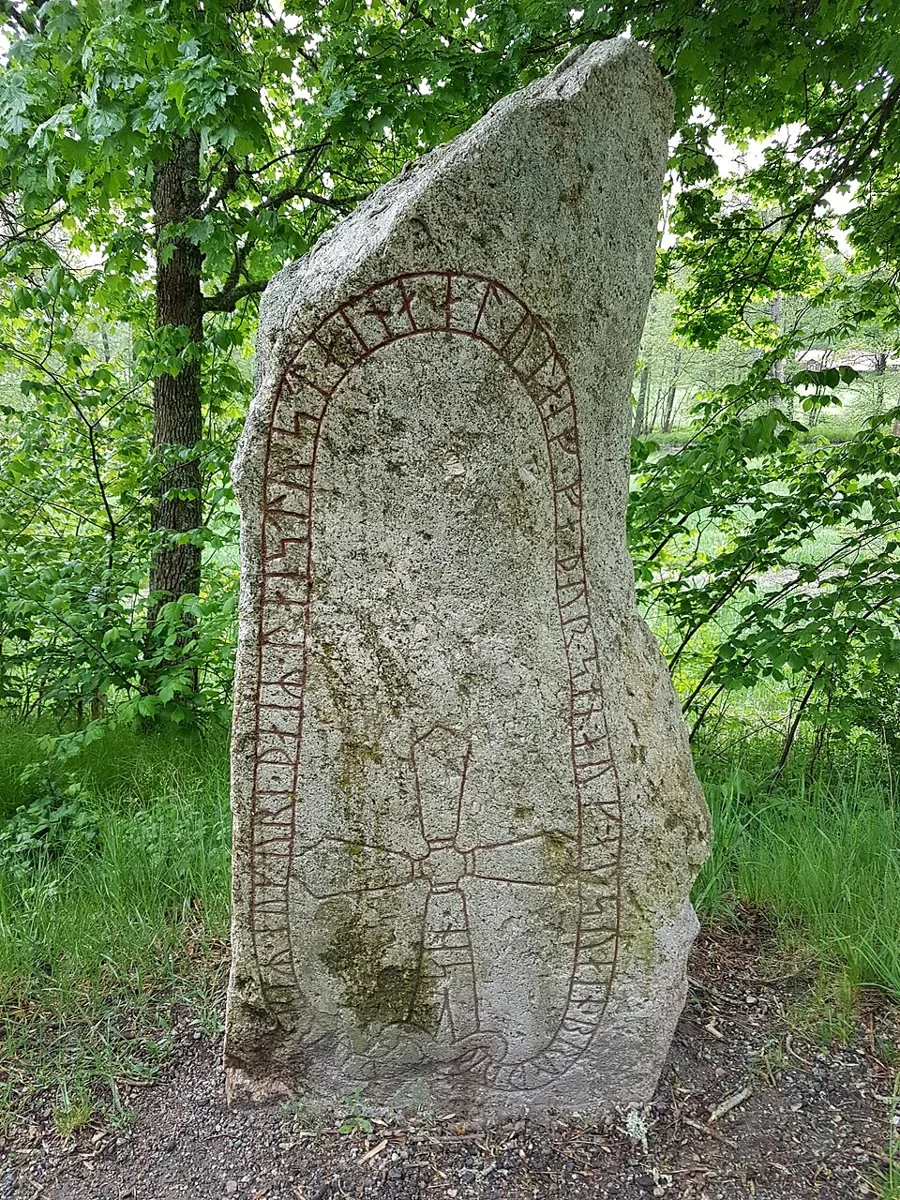
Skåäng eastern-journey memorial (Sö 33); photograph of the surviving carved surface.Image: Berig · CC BY-SA 3.0
Gnupa had the stone raised for his brother Gullev. The inscription says that he died in the east; interpretation of the following wording about his service or company is less certain.
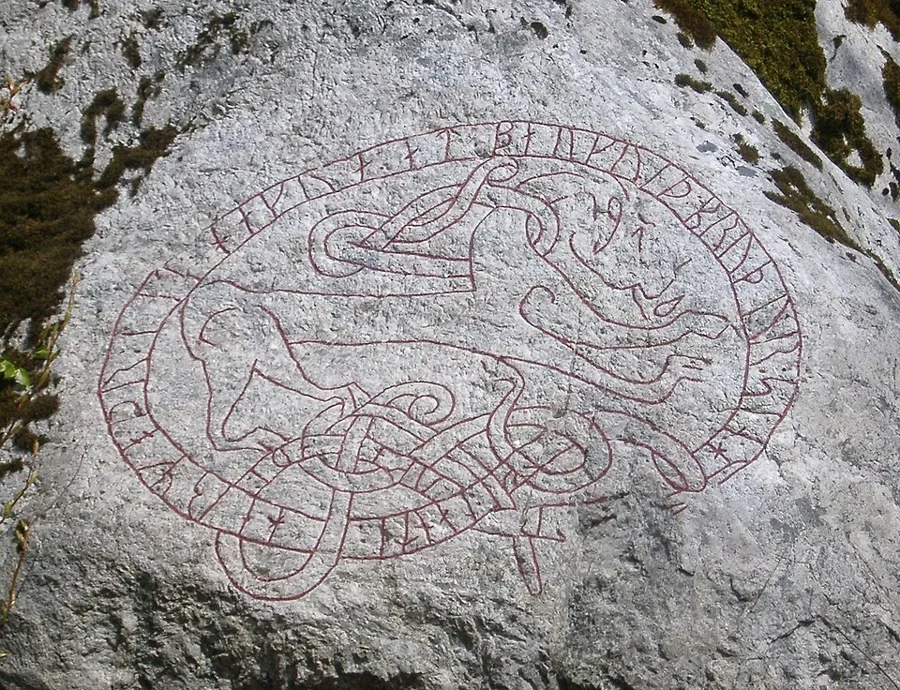
Tjuvstigen brothers' memorial (Sö 34); photograph of the surviving carved surface.Image: Berig · CC BY-SA 3.0
Styrlög and Holm raised stones for their brothers Torkel and Styrbjörn, described favourably, who died on the eastern route. The text also refers to the monuments' position beside the way.
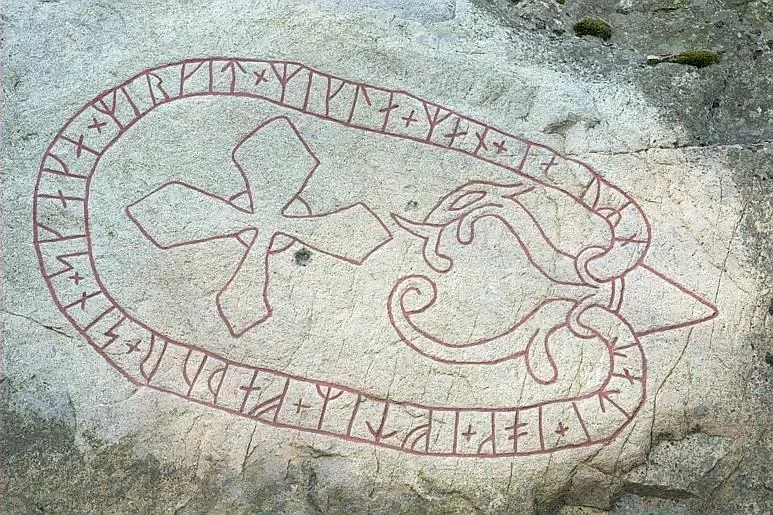
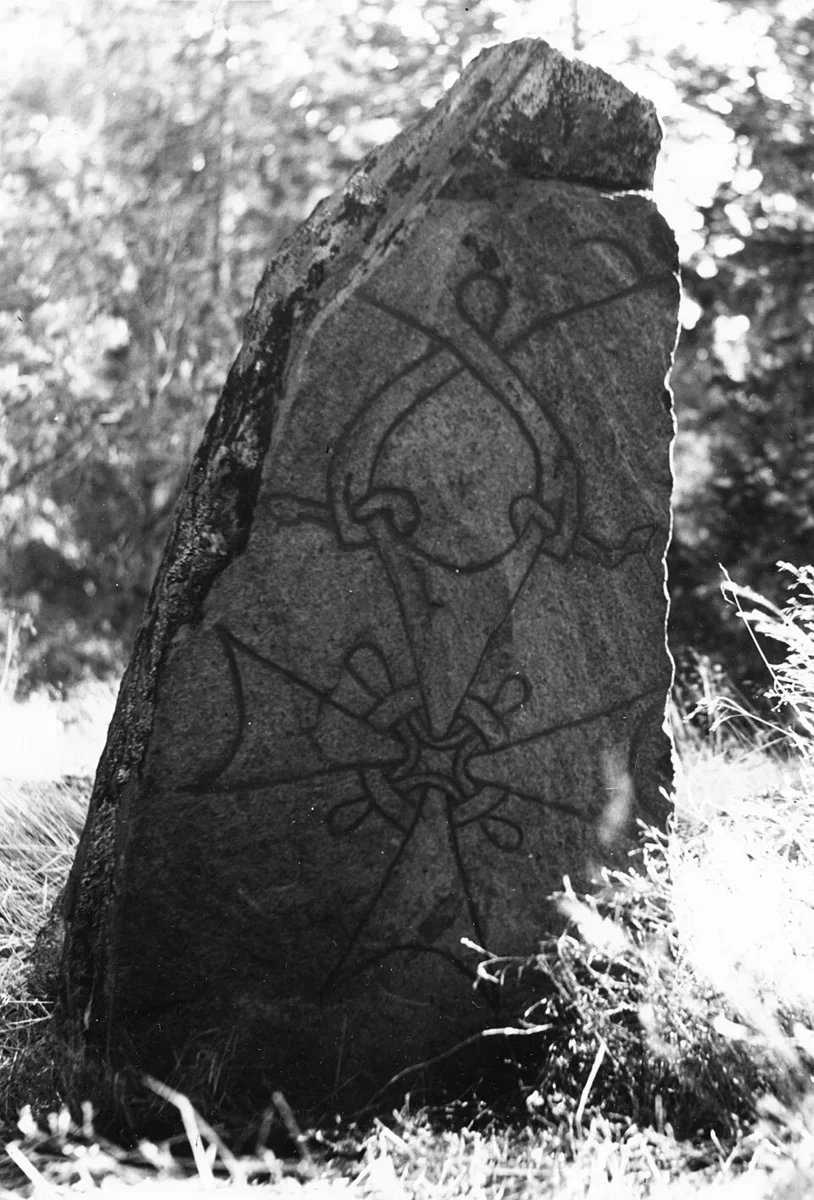
Tjuvstigen parents' memorial (Sö 35); photograph of the surviving carved surface.Image: Catasa · CC BY-SA 3.0
The sponsor had another stone raised for their sons. It asks God to help their spirits and names Torer as carver. The sponsor's name and a phrase about making the decoration have been read differently.
Trosa bro runestone (Sö 36); photograph of the surviving carved surface.Image: Jan Ainali · CC BY-SA 4.0
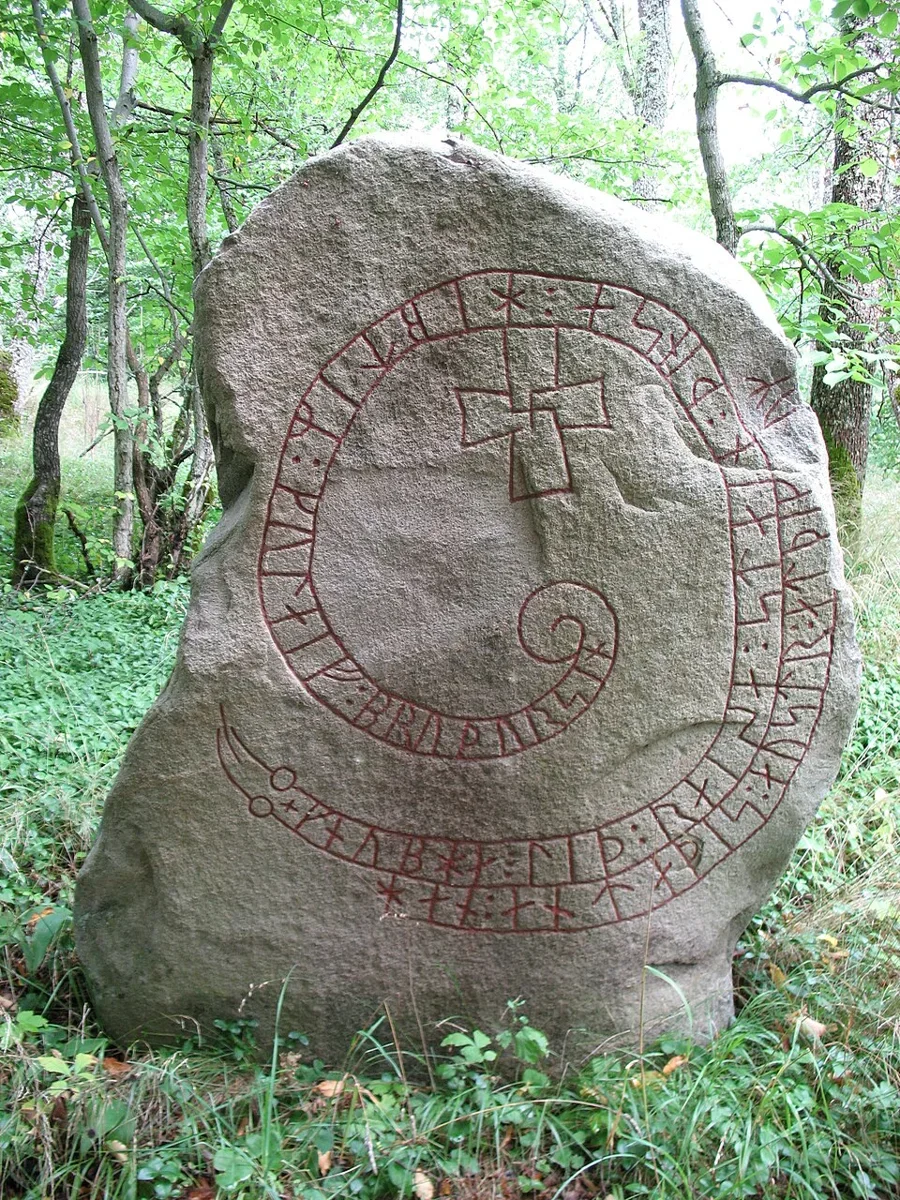
Tåte carved a large memorial for his father, whose name is read Skage or Skakke. The closing words express the hope that the monument will continue to be spoken about.
Stora Släbro runestone (Sö 45); photograph of the surviving carved surface.Image: Thekatening · CC BY-SA 4.0
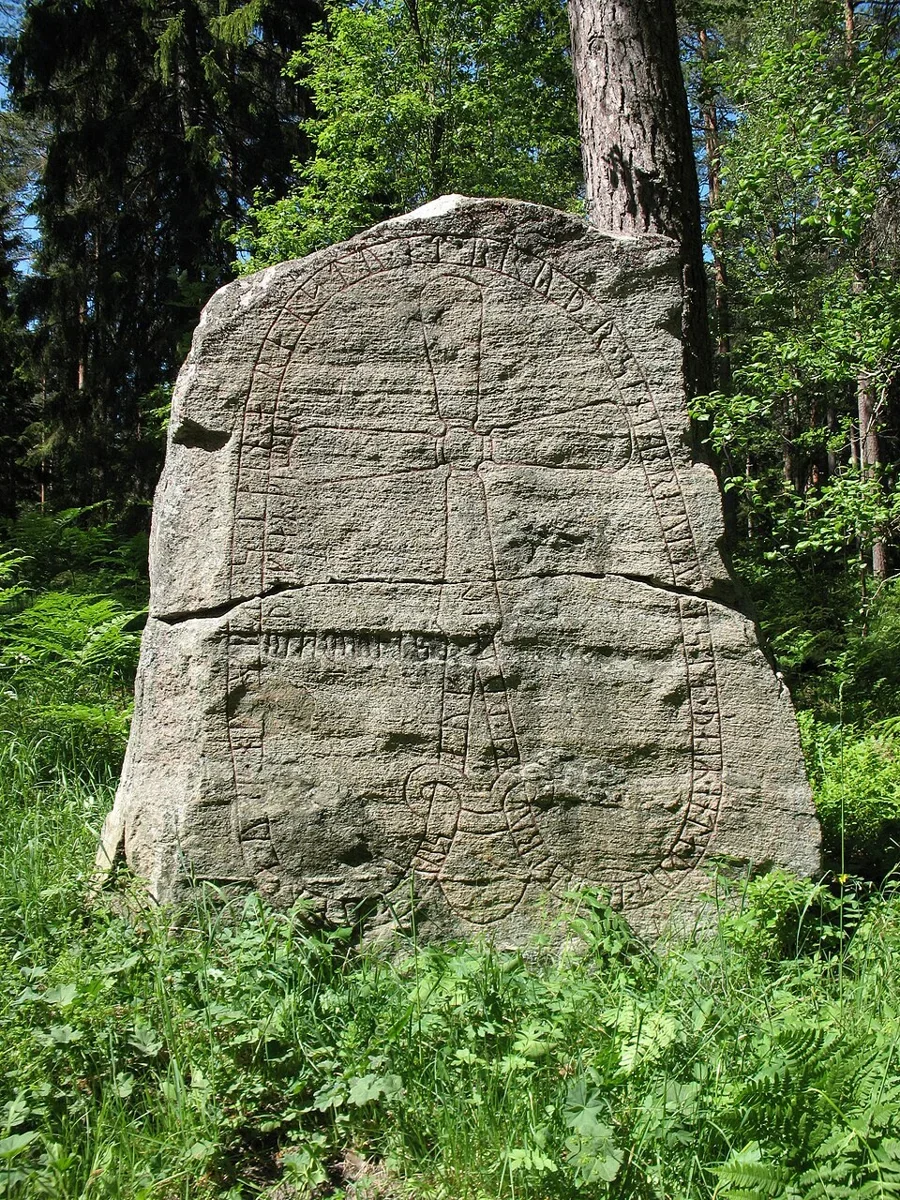
Askil and another sponsor raised the stone for their brother Svärre, who died in England. A final clause identifies makers of the memorial, although some names are difficult to read.
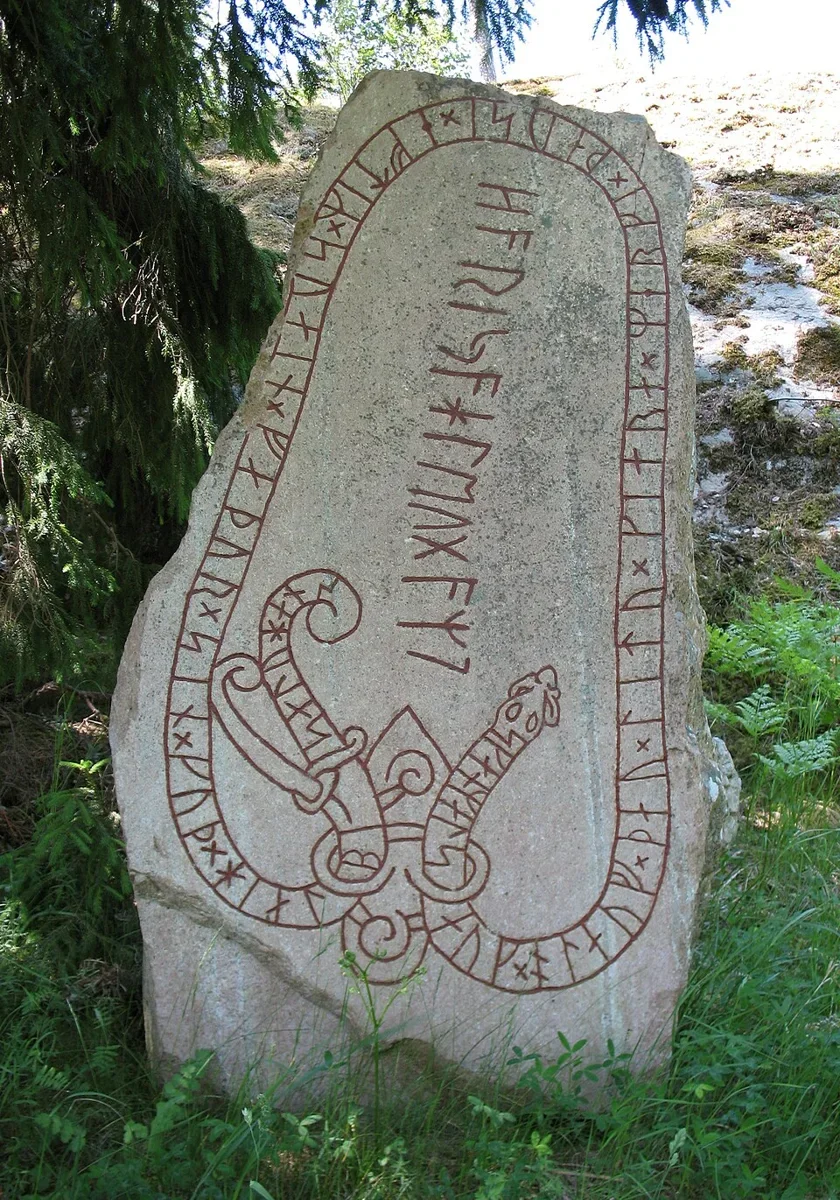
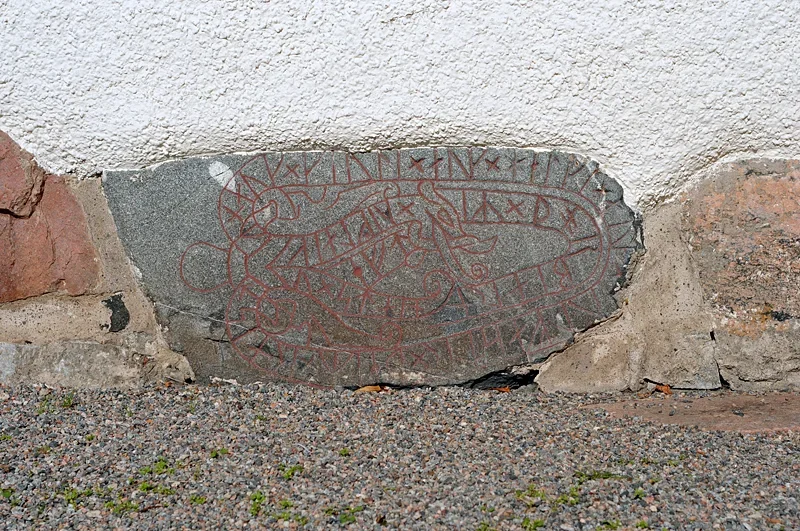
Rörik made the memorial for his son Asmund. Another part refers to the son's burial, but the place or wording is disputed. Cipher writing on the inner surface also refers to Rörik's son.
Stigtomta church runestone (Sö 48); photograph of the surviving carved surface.Image: TS Eriksson · CC BY 3.0
Four sponsors, including Viglek and Helge, raised the stone for Torbjörn. Some of the personal names have differing readings. The inscription does not state their relationship to the man commemorated.
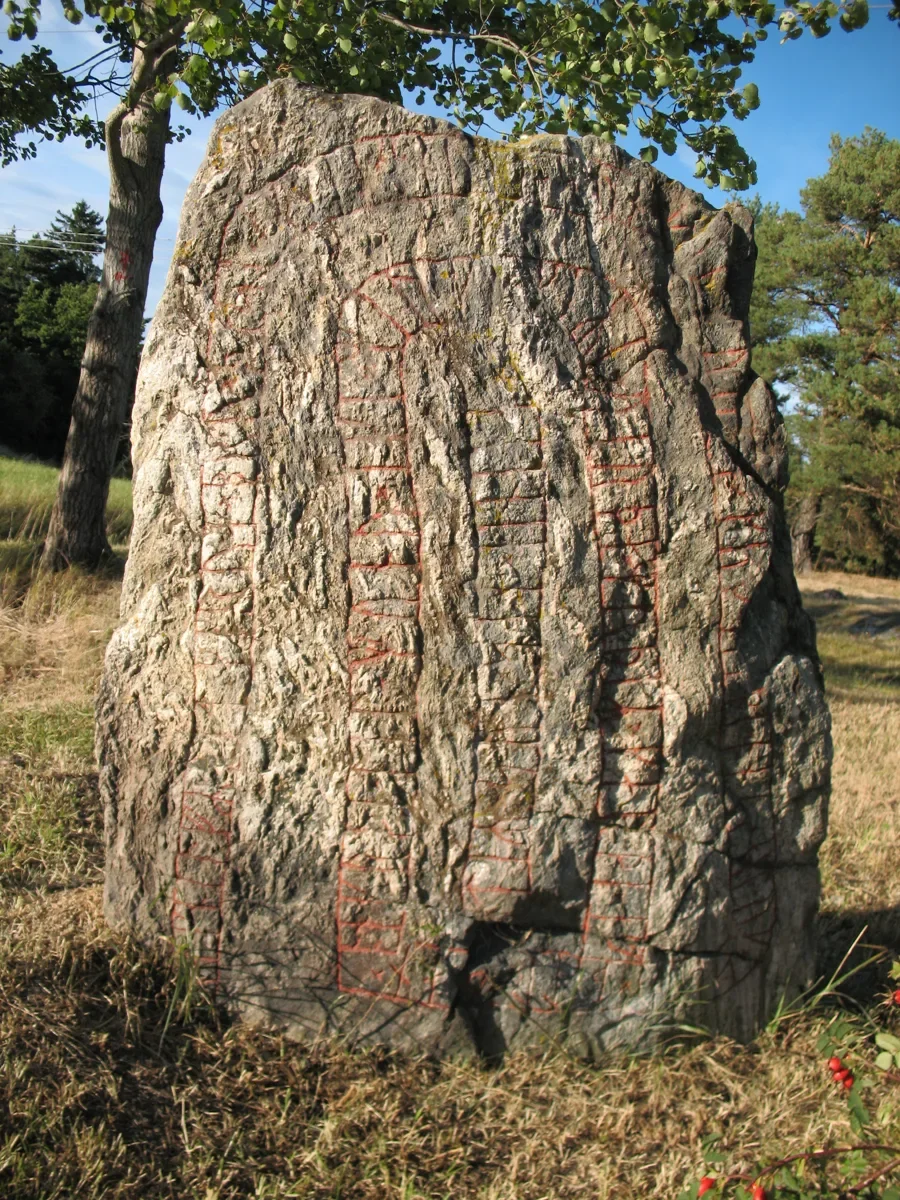
The surviving inscription U 69 at Eggeby. Photograph of the actual monument; modern paint may make the carving more visible.Image: Berig · CC BY 3.0
Ragnälv had a bridge made in memory of Anund, her only son. A prayer asks for divine help for him; the closing lines praise the memorial made by his mother.
The surviving inscription U 73 at Hägerstalund. Photograph of the actual monument; modern paint may make the carving more visible.Image: Berig · CC BY-SA 3.0
The memorial records inheritance passing from Inga’s sons to Inga and then to Gärdar and his brother. The brothers died in Greece, meaning the Byzantine world.
The surviving inscription U 88 at Skälby. Photograph of the actual monument; modern paint may make the carving more visible.Image: Jssfrk · CC BY-SA 3.0
The surviving inscription U 101 at Södersätra. Photograph of the actual monument; modern paint may make the carving more visible.Image: Berig · CC BY-SA 3.0
Häming and Jarlabanke had a road cleared and bridges built for their father. Estrid also commemorates her sons Ingefast and Ingvar. A prayer asks God to help their spirits.
The surviving inscription U 116 at Älvsunda. Photograph of the actual monument; modern paint may make the carving more visible.Image: Udo Schröter · CC BY-SA 3.0
The surviving inscription U 117 at Älvsunda. Photograph of the actual monument; modern paint may make the carving more visible.Image: Udo Schröter · CC BY-SA 3.0
The surviving inscription U 127 at Danderyd Church. Photograph of the actual monument; modern paint may make the carving more visible.Image: Berig · CC BY-SA 3.0
The surviving inscription U 130 at Norahällen. Photograph of the actual monument; modern paint may make the carving more visible.Image: Bengt Oberger · CC BY-SA 3.0
Björn, Finnvid’s son, commemorates his brother Olev, who was betrayed and killed in Finnveden. He asks God to help Olev’s spirit and identifies the estate as inherited family land.
No monuments match. Try another name or reset the filters.
Reading the evidence
Missing or disputed words can change an inscription’s meaning. Our summaries explain the message without inventing missing passages. Names and dates may appear differently in other editions.
Photographs retain their individual licenses; credits appear beside every image. Where no photograph is available, the entry links to its documentary source. Location and historical sources are linked on each stone page.