

Sweden · U 135
Broby bro — U 135 ↗
Viking Age
Ingefast, Östen and Sven raised stones for their father Östen and made a bridge and a mound in his memory.
A map of memory
Explore well-documented stones and the people remembered on them. Choose a map marker or a photograph to read the story.
This is a curated selection of runestones, inscribed stone crosses and related rock inscriptions, including monuments from before and after the Viking Age. Anglo-Saxon and Norse traditions are identified separately. Each page distinguishes a readable summary of the inscription from a literal translation.
Country includes entries with a recorded country but no coordinates. Region filters use the displayed map reference point, which may be historical; they do not verify present-day display or visitor access.
Search and filters cover the complete register. Object types follow the existing entry descriptions; missing or uncertain types remain unspecified.
Showing 121–140 monuments · Page 7
Loading the map. Stone pages and documented locations are also available below.
Zoom in to separate nearby stones. Numbered markers group nearby locations. Only entries with documented coordinates have map pins. A pin may mark an earlier recorded position, an original setting or a later display location. Open the entry for the coordinate source and any verified visitor location. Browse the entries ↓
Sweden · U 135
Viking Age
Ingefast, Östen and Sven raised stones for their father Östen and made a bridge and a mound in his memory.
Sweden · U 136
Viking Age
Estrid raised these stones for her husband Östen. He travelled towards Jerusalem and died in Greece, the Byzantine world.
Sweden · U 137
Viking Age
Östen and Estrid raised stones in memory of their son Gag.
Sweden · U 143
Viking Age
Jorun had bridges made for her husband; Häming and Jarlabanke commemorated Ingefast, and Estrid commemorated Ingvar, praised as a very good young man.
Sweden · U 147
Viking Age
The damaged text names Jorun and commemorates Ingefast and Ingvar. Parts of the commissioning formula and personal names are missing.
Sweden · U 148
Viking Age
Ingefast commissioned the runes for his wife Ragnfrid, and Häming commemorated his mother.
Sweden · U 150
Viking Age (style-based dating)
Jarlabanke and Fastvi had stones raised for their son Sven. Parts now missing are known through older records.
Sweden · U 151
Viking Age
Torbjörn and Ingetora raised the stone for Ingul, their father, and Ärenvi remembered her husband. The damaged ending once named another commemorated person.
Sweden · U 152
Viking Age
Holmfrid had the stone raised for her husband Björn and her son Sigvat.
Sweden · U 153
Viking Age
Sven and Ulf raised stones for their brothers Halfdan and Gunnar. The surviving text says that the brothers died in the east, but the ending is damaged.
Sweden · U 154
Viking Age
The fragmentary memorial mentions a name ending in -fast and Gerbjörn, understood as brothers of the commissioner. It says that they died in the east.
Sweden · U 155
Viking Age
The surviving text names Sven and Ulf as commissioners and identifies them as the sons of Örn and Ragnfrid. Other parts of the memorial are missing.
Sweden · U 160
Viking Age
Ulvkättil, Gye and Une raised the stone for their father Ulf, who lived at Skålhamra. They ask God and God’s mother to help his spirit and soul and grant him light and paradise.
Sweden · U 225
Viking Age (style-based dating)
Ulf’s sons made an assembly place in his memory. The surviving names include Arnkel and Gye; the damaged first name is reconstructed as Ulvkell. A verse praises their memorial.
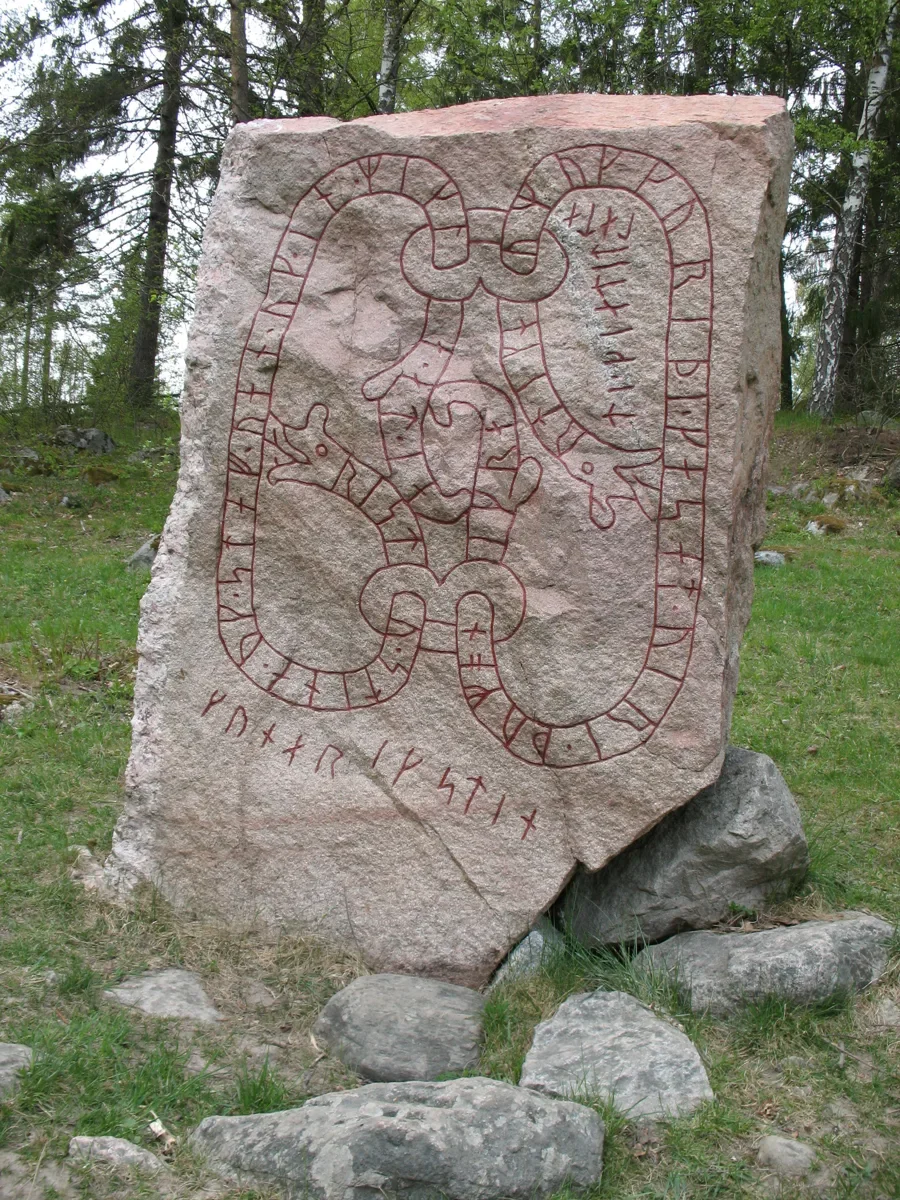
Sweden · U 226
Viking Age
Continuing U 225, the text describes stones and a memorial staff or post, whose precise interpretation is uncertain. Gyrid’s grief for her husband is remembered. Gunnar identifies himself as the carver.
Sweden · U 241
Viking Age
Dan, Huskarl and Sven commemorated their grandfather Ulvrik. He had received two payments in England. The prayer asks for help for father and son.
Sweden · U 654
Mid-eleventh century CE (institutional estimate)
Five sons commemorated Gunnlev, their father, who was killed in the east with Ingvar. He is praised for his skill in steering a knarr. One son’s name remains uncertain; the carver’s name is probably Alrik.
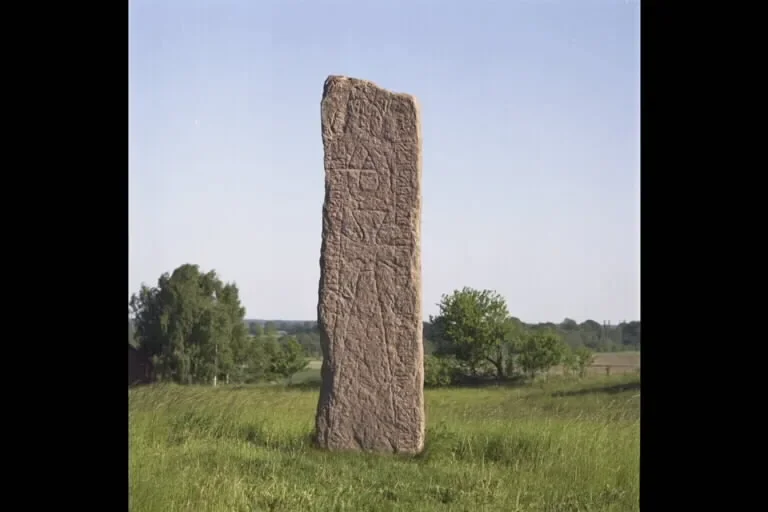
Sweden · Vg 55
Viking Age, eleventh century
Ulv and Ragnar commemorate their father Fare. Despite a damaged passage, the inscription clearly stresses his Christian faith.
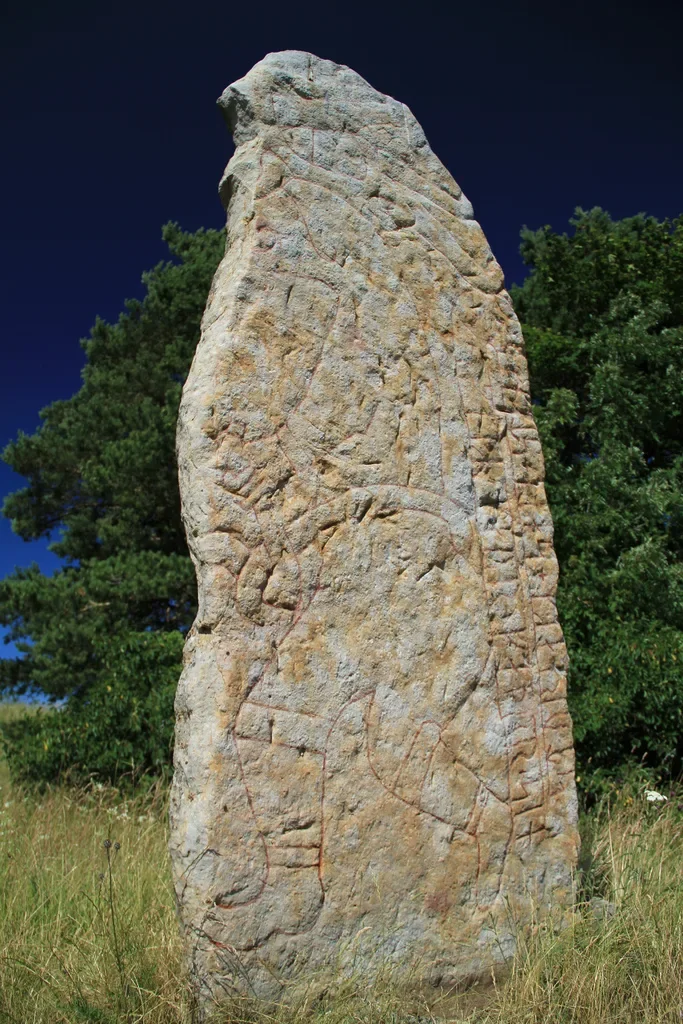
Sweden · Vg 56
Viking Age (style-based dating)
The damaged personal names are usually interpreted as Styrlak and Kår: a son commissioned this memorial for his father. The reading of the names remains uncertain.
Sweden · Sm 77
Viking Age
Vråe commemorates Gunne, his brother, whose death occurred in England.
No monuments match. Try another name or reset the filters.
Missing or disputed words can change an inscription’s meaning. Our summaries explain the message without inventing missing passages. Names and dates may appear differently in other editions.
Photographs retain their individual licenses; credits appear beside every image. Where no photograph is available, the entry links to its documentary source. Location and historical sources are linked on each stone page.
Entries have individual source-review dates; the latest entries were reviewed November 11, 2026. Map: © OpenStreetMap contributors. Report a base-map issue ↗
Keep exploring
Region sources (reviewed 2 November 2026): Klimadatastyrelsen / SDFI — DAGI, retrieved 2026-11-02; point classifications derived by Nordic Viking History · CC BY 4.0; Klimadatastyrelsen / SDFI — DAGI, retrieved 2026-11-14; point classifications derived by Nordic Viking History · CC BY 4.0; © Kartverket · CC BY 4.0. Swedish counties: Statistics Sweden, RegSO 2025 (CC0).





