

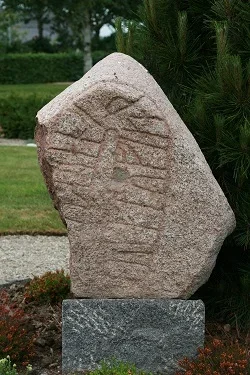
Denmark · DR 34
Horne runestone ↗
Viking Age
Ravnunge-Tue is credited with making a mound. The damaged wording can be understood as referring either to this mound or to Thyra’s mound; the uncertainty should remain visible.
A map of memory
Explore well-documented stones and the people remembered on them. Choose a map marker or a photograph to read the story.
This is a curated selection of runestones, inscribed stone crosses and related rock inscriptions, including monuments from before and after the Viking Age. Anglo-Saxon and Norse traditions are identified separately. Each page distinguishes a readable summary of the inscription from a literal translation.
Country includes entries with a recorded country but no coordinates. Region filters use the displayed map reference point, which may be historical; they do not verify present-day display or visitor access.
Search and filters cover the complete register. Object types follow the existing entry descriptions; missing or uncertain types remain unspecified.
Showing 81–100 monuments · Page 5
Loading the map. Stone pages and documented locations are also available below.
Zoom in to separate nearby stones. Numbered markers group nearby locations. Only entries with documented coordinates have map pins. A pin may mark an earlier recorded position, an original setting or a later display location. Open the entry for the coordinate source and any verified visitor location. Browse the entries ↓
Denmark · DR 34
Viking Age
Ravnunge-Tue is credited with making a mound. The damaged wording can be understood as referring either to this mound or to Thyra’s mound; the uncertainty should remain visible.
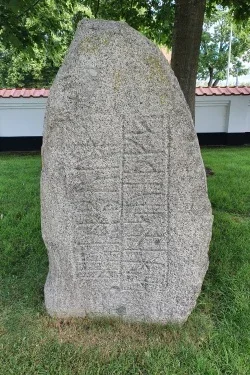
Denmark · DR 250
Approximately eighth century; at the transition into the Viking Age
The brief inscription identifies the stone with Hornbore and describes his connection with Svide’s lineage. It does not give the extended memorial narrative familiar from many later stones.
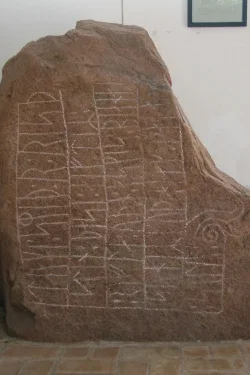
Denmark · DR 91
Viking Age
Toke the smith commemorates Revle, whose ancestry is also named, and asks God to help their souls. The text links craft identity, family descent and Christian prayer.
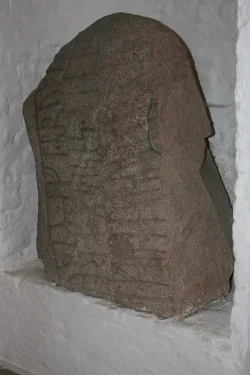
Denmark · DR 37
Viking Age
The incomplete text includes a man called Fáinn, a statement about death in a place possibly read as Svia, and remembrance of a brother. Neither the complete message nor the place-name is certain.
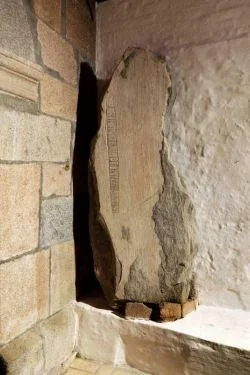
Denmark · DR 144
800s CE (source-stated estimate)
Østen commemorates his father Asulv. Unlike the much longer neighbouring memorial, this stone preserves a compact father-and-son commemoration.
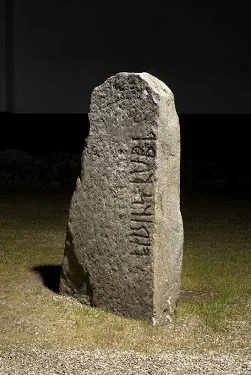
Denmark · DR 17
Early Viking Age, approximately 750–850
The extremely brief inscription identifies the monument with Erik. It gives no surviving narrative about his life, death or the person who commissioned it.
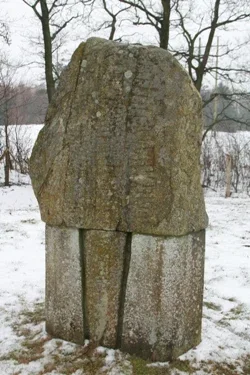
Denmark · DR 40
Viking Age
Tue, described as a bryde or estate manager, commemorates his wife Thorgunn. The inscription expresses the hope that the carved characters will preserve her memory for a long time.
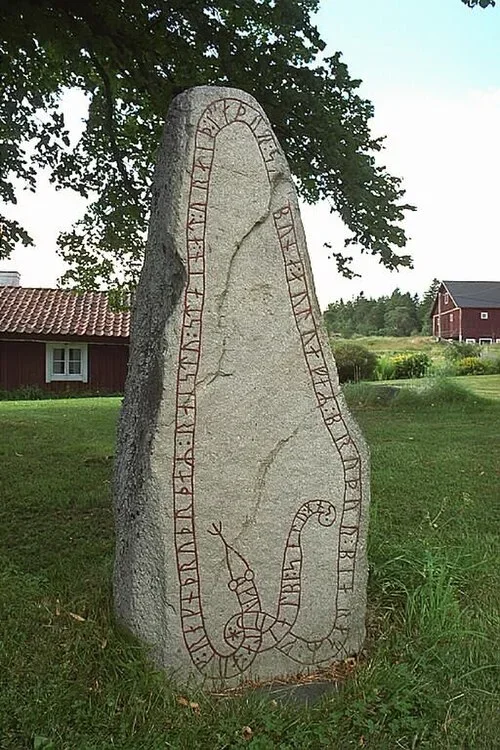
Sweden · Sö 8 · Runestone
Viking Age (style-based dating)
Gylla and Ragntrud raised the memorial for their father Vred. The text also identifies his wife and his brother Björn, then asks God to help his soul.
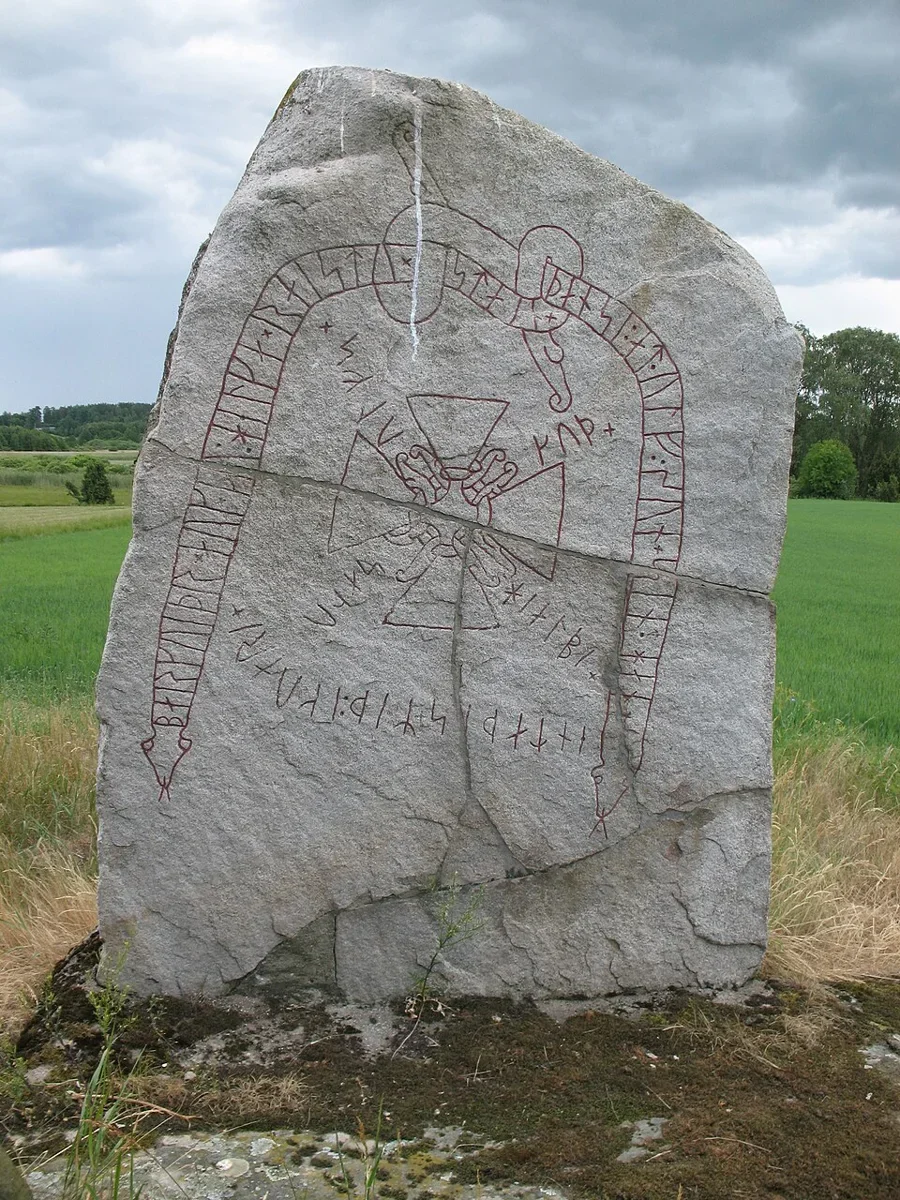
Sweden · Sö 9 · Runestone
Viking Age (style-based dating)
Bergvid and Helga commemorated their son Ulf. The inscription says he died with Ingvar and ends with a prayer for his soul.
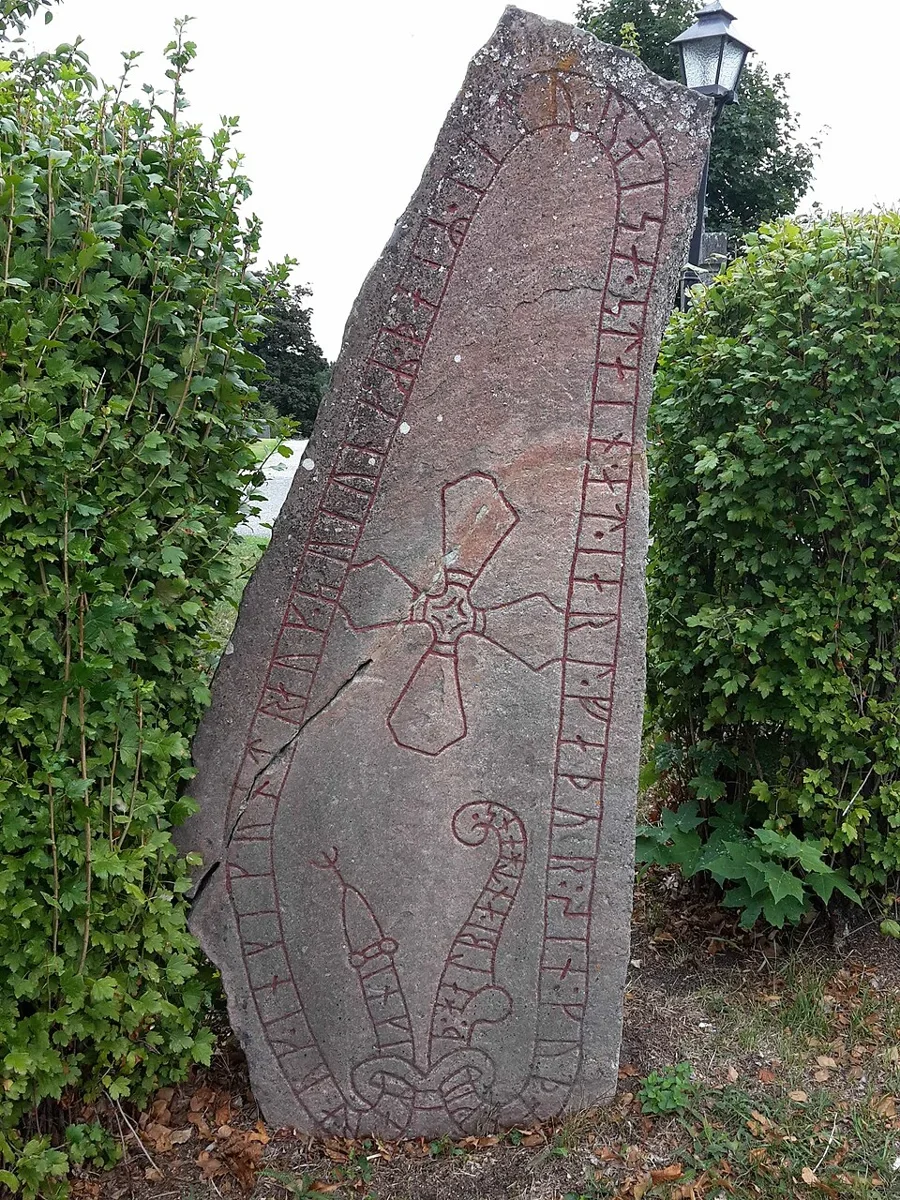
Sweden · Sö 10 · Runestone
Viking Age (style-based dating)
Ingemar, Ingemund and Svenung had the stone raised for their father Jarl, praised as good. The inscription asks God to help his spirit.
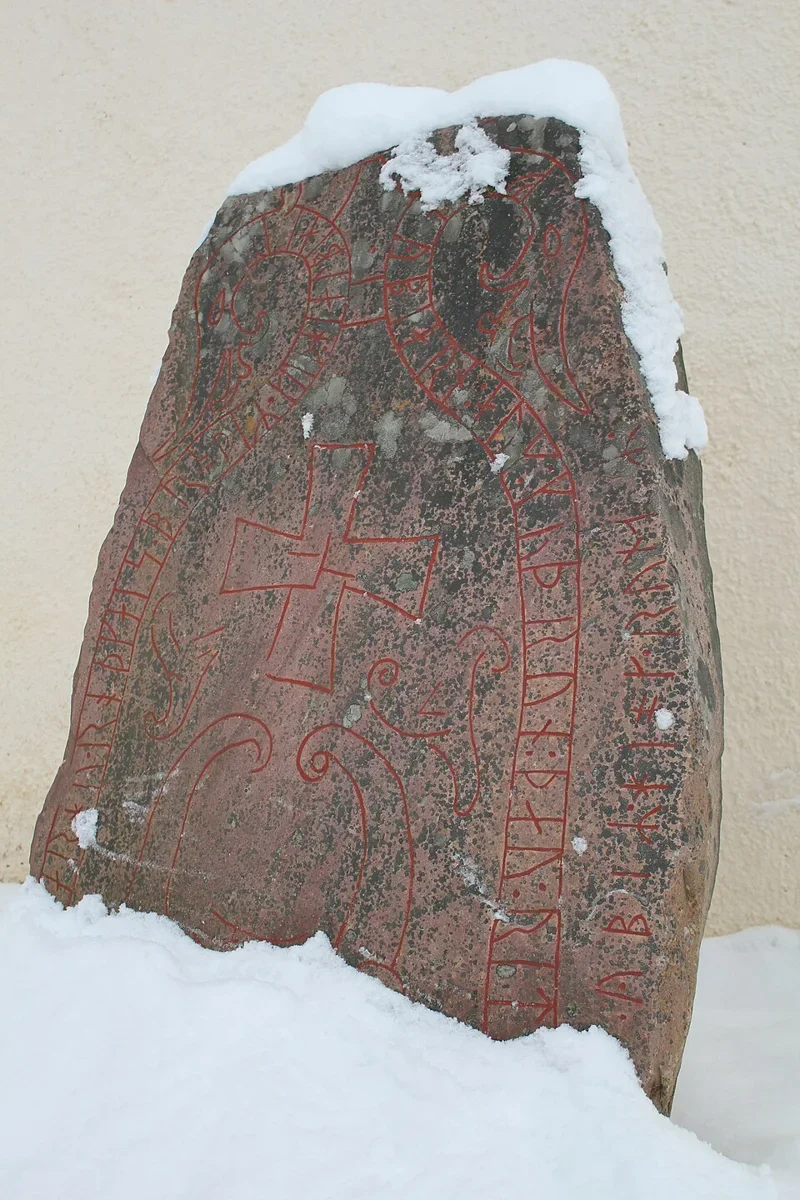
Sweden · Sö 11 · Runestone
Viking Age
Fröbjörn and Gudrun commemorated their son Romund, praising his ability. Another memorial clause and personal names are harder to interpret. The text includes a prayer and the carver Öpir's signature.
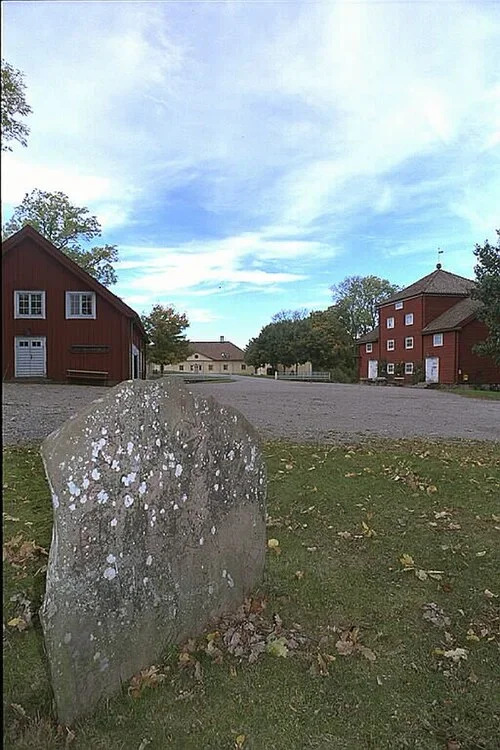
Sweden · Sö 13 · Runestone
Viking Age
The damaged inscription names Viking and Myskja as sponsors of a memorial for Sigbjörn. Missing portions prevent a secure reconstruction of every relationship and word.
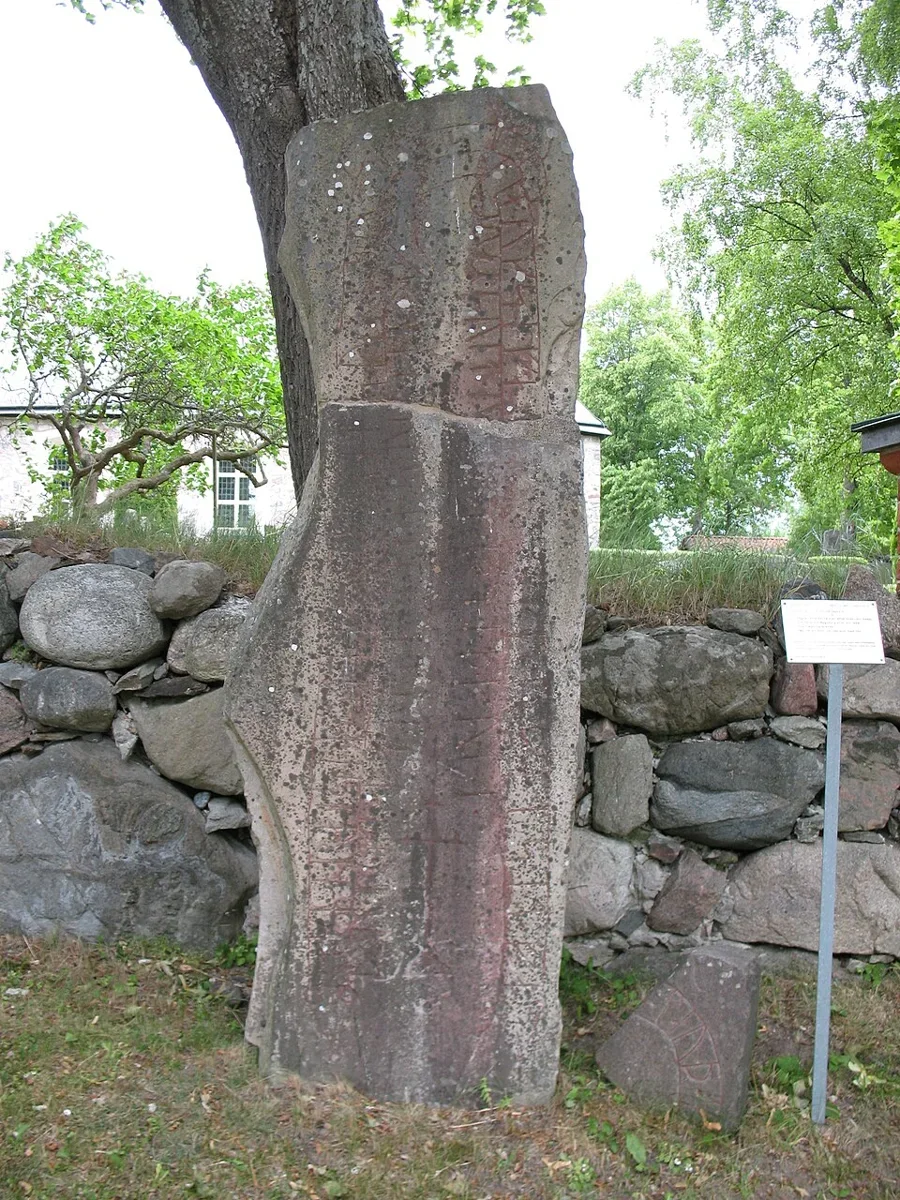
Sweden · Sö 14 · Runestone
Viking Age (style-based dating)
Ragna commemorated her husband Sven, while Säva and Ragnborg commemorated their father. A prayer asks God to help him. The final lines recall that Sven had travelled west with a leader whose name has been interpreted in different ways.
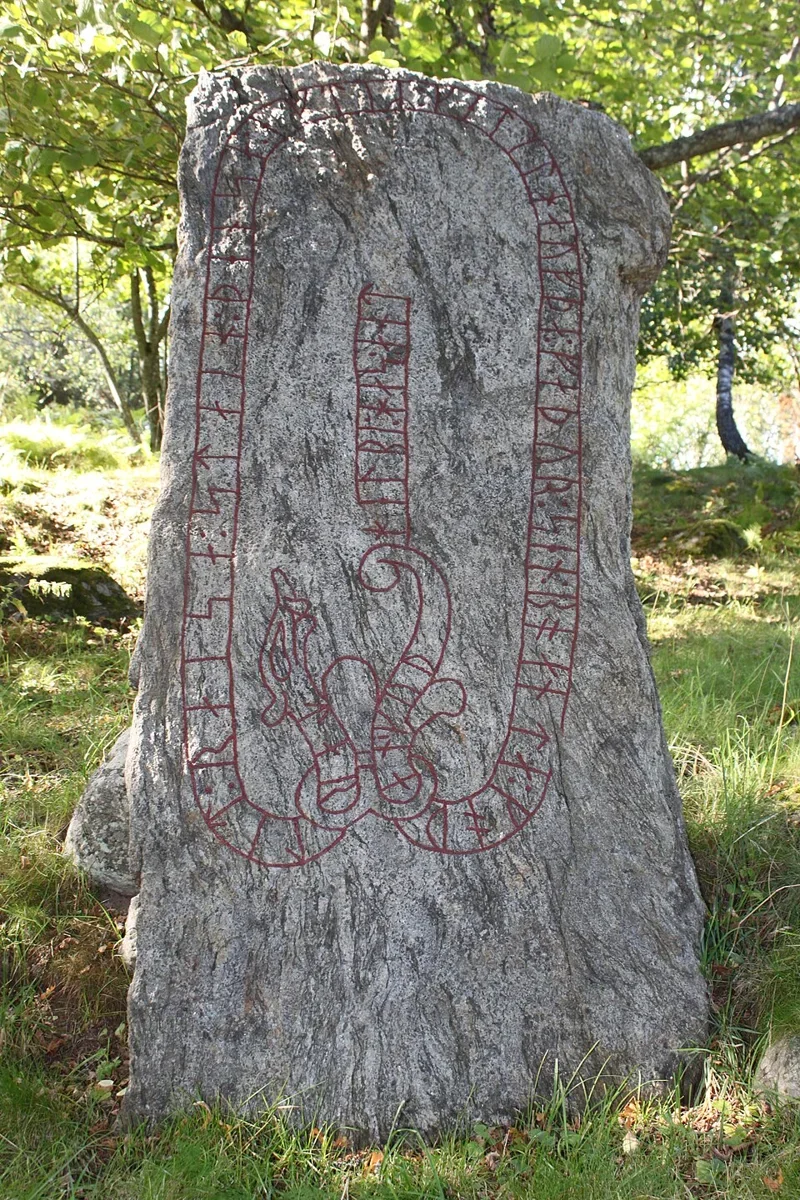
Sweden · Sö 19 · Runestone
Viking Age
Tar had the stone raised for his father Kättelhövde, described as a good householder. It ends with a prayer for his spirit.
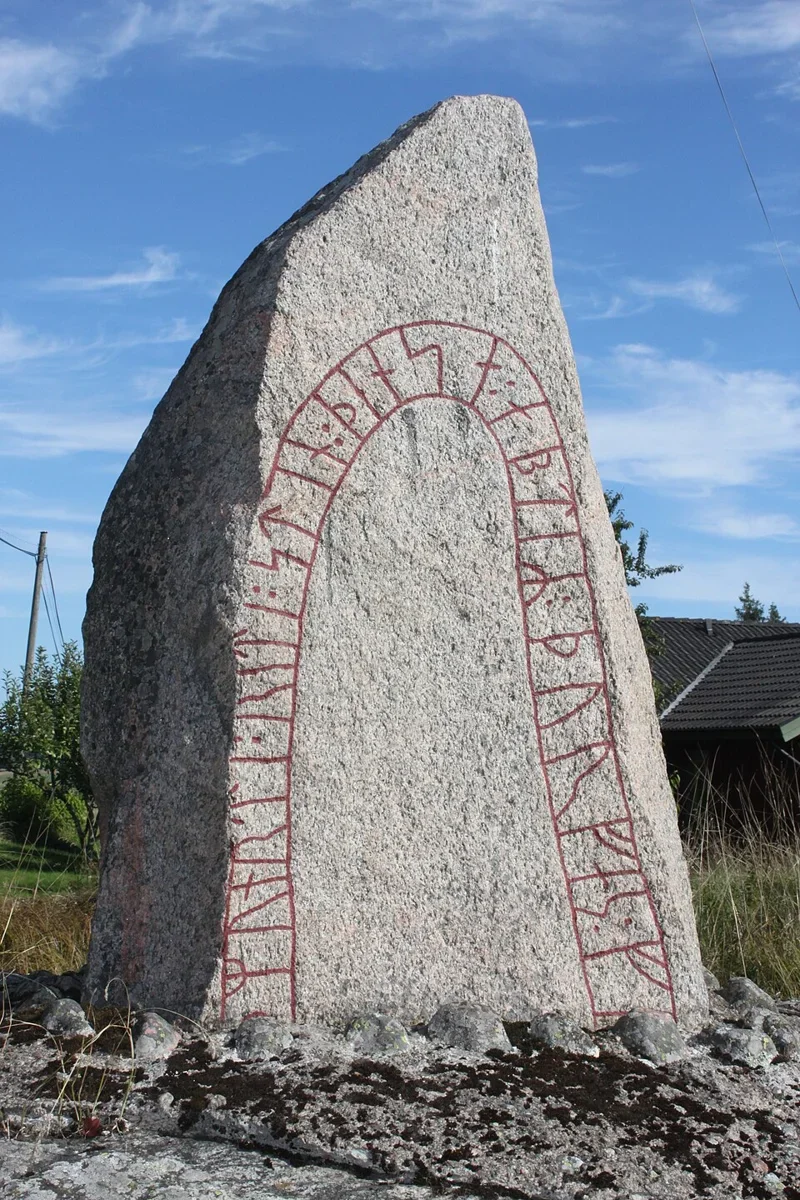
Sweden · Sö 20 · Runestone
Viking Age
Gudmund raised the memorial for Torfast. The damaged ending is usually understood to identify Torfast as his father, but the relationship is not completely preserved.
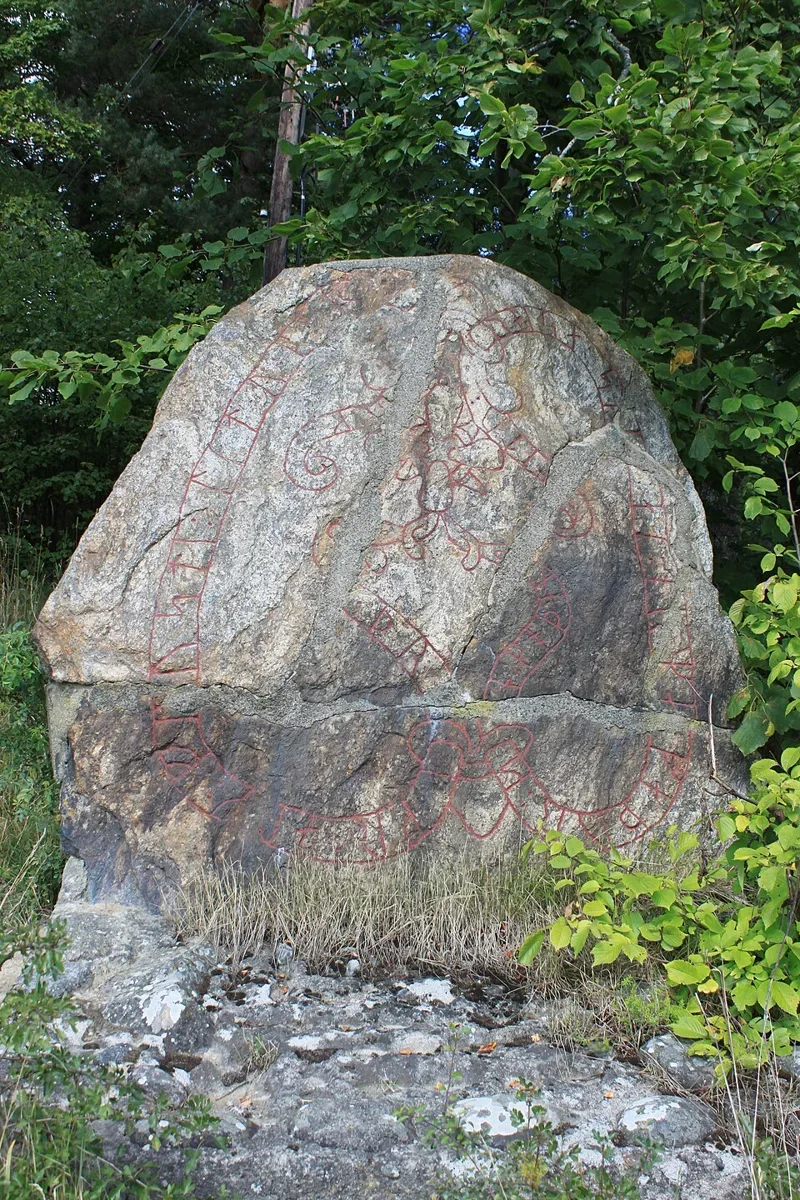
Sweden · Sö 22 · Runestone
Viking Age
Tydisk and Froste had a bridge made and the stone raised for their father Orme, praised as good.
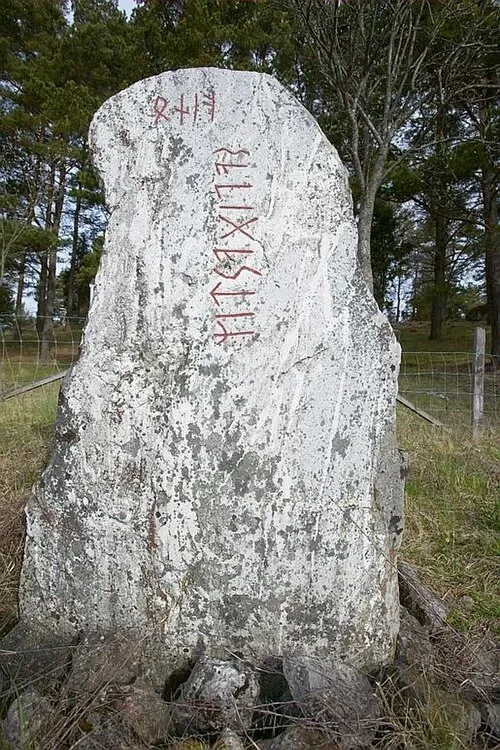
Sweden · Sö 24 · Runestone
Before the Viking Age; Elder Futhark inscription
The short Elder Futhark text consists of two names, conventionally read Fino and Saligastir. It does not explain their relationship or state who commissioned the inscription.
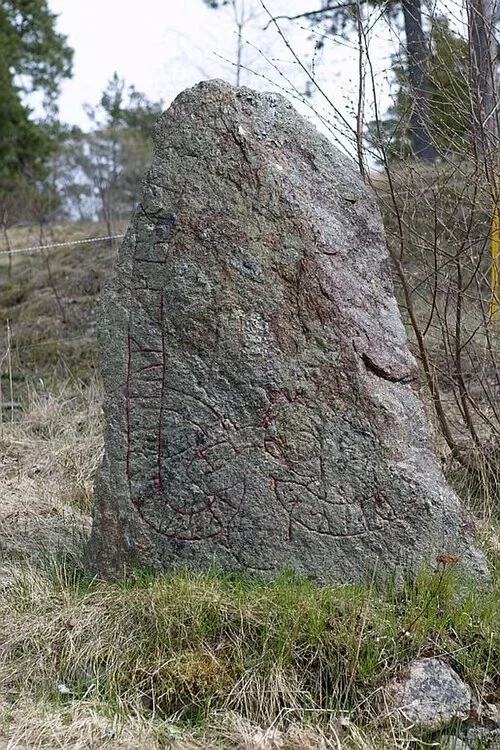
Sweden · Sö 25 · Runestone
Viking Age
Vigöt, Ingjald and Atsur raised the stone in memory of their father Sven.
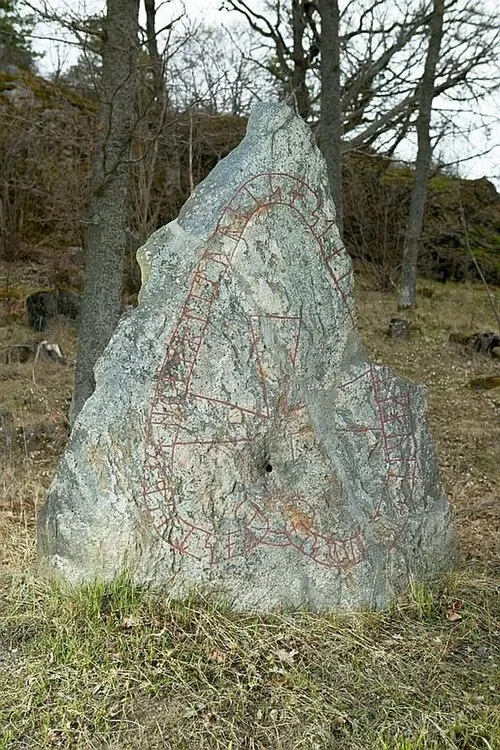
Sweden · Sö 26 · Runestone
Viking Age
Two named sponsors had the stone raised for their brother Sigvat. The sponsors' damaged names have received differing readings, so the family relationship is clearer than their exact forms.
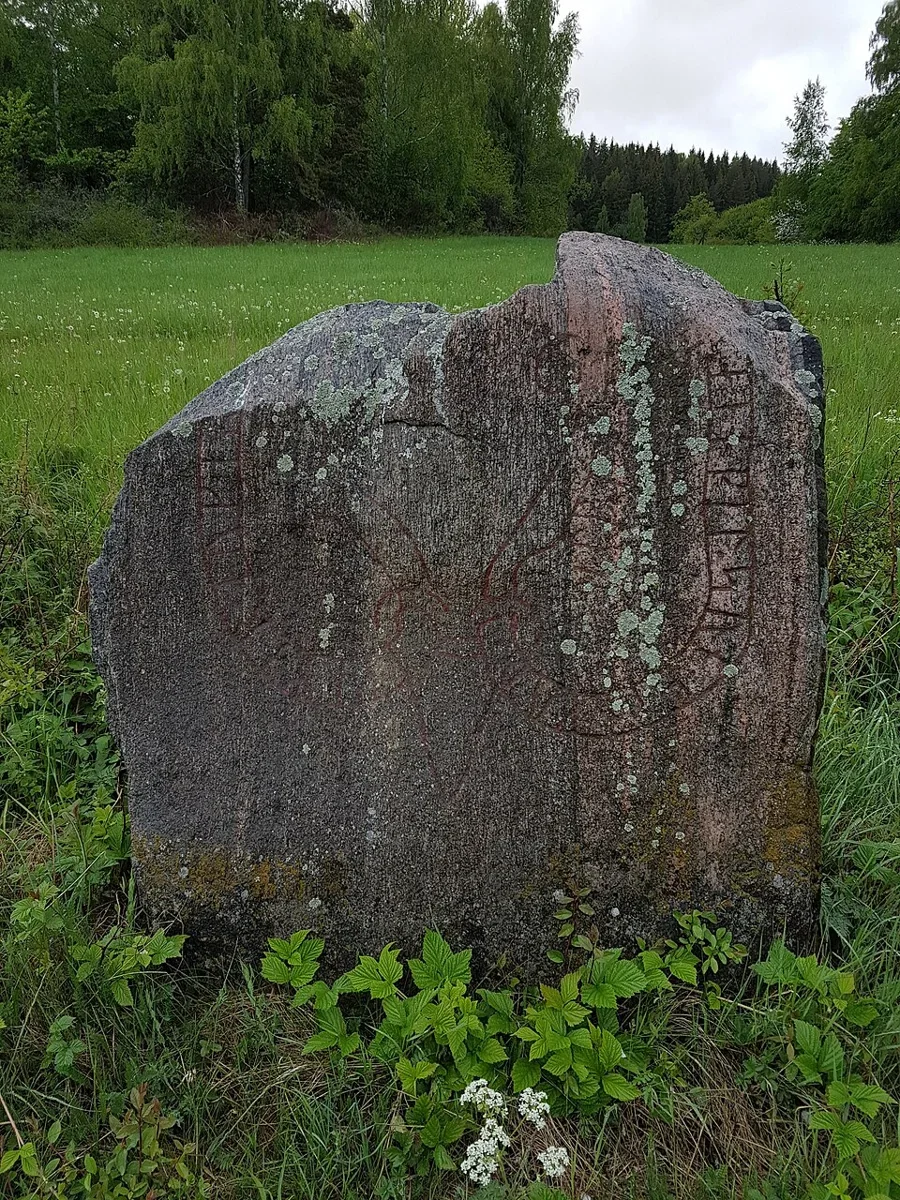
Sweden · Sö 30 · Runestone
Viking Age (style-based dating)
The fuller inscription recorded in older documentation commemorated Stenkil and combined raising a stone with making a bridge. It also included a Christian prayer. Only part of that text survives on the fragment.
No monuments match. Try another name or reset the filters.
Missing or disputed words can change an inscription’s meaning. Our summaries explain the message without inventing missing passages. Names and dates may appear differently in other editions.
Photographs retain their individual licenses; credits appear beside every image. Where no photograph is available, the entry links to its documentary source. Location and historical sources are linked on each stone page.
Entries have individual source-review dates; the latest entries were reviewed November 11, 2026. Map: © OpenStreetMap contributors. Report a base-map issue ↗
Keep exploring
Region sources (reviewed 2 November 2026): Klimadatastyrelsen / SDFI — DAGI, retrieved 2026-11-02; point classifications derived by Nordic Viking History · CC BY 4.0; Klimadatastyrelsen / SDFI — DAGI, retrieved 2026-11-14; point classifications derived by Nordic Viking History · CC BY 4.0; © Kartverket · CC BY 4.0. Swedish counties: Statistics Sweden, RegSO 2025 (CC0).





