

Life & Society · Focused study
The Mästermyr Chest: Joinery, Ironwork and Keeping Tools Together

In Brief
The Mästermyr find is famous for its tools, but the container deserves attention in its own right. Oak boards, an iron locking arrangement and the surrounding chain made the chest part of the equipment rather than neutral packaging.
On this page
The box is a worked objectA chain around a locked containerWhy the assemblage should remain togetherSourcesThe box is a worked object
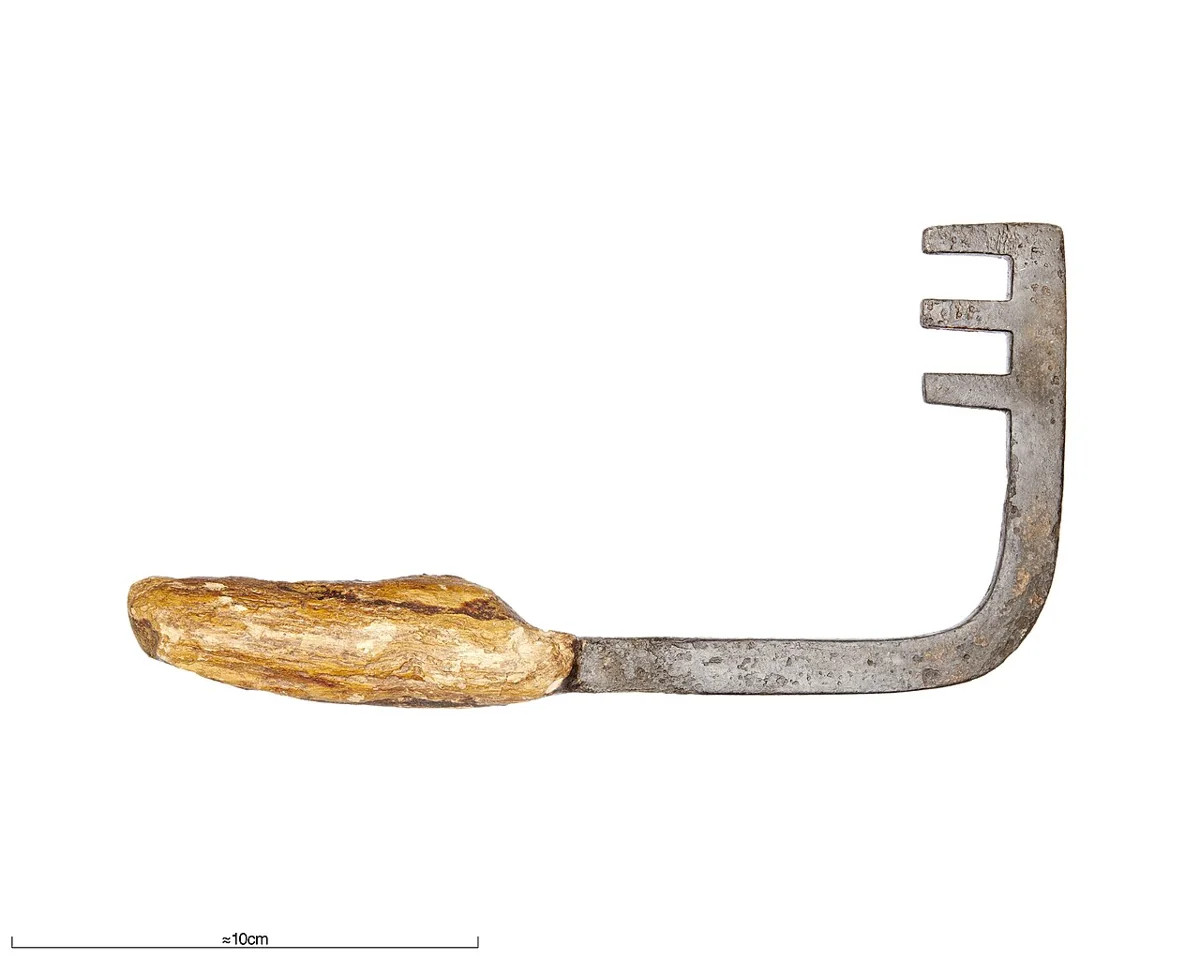
The Swedish History Museum records an oak chest with a slightly curved plank lid, joined corners and an iron locking arrangement. Its dimensions are approximately 90 centimeters long and 30 centimeters high. The construction combines woodworking and metal fittings: the container could not function through either craft alone. Looking at the chest before counting its contents changes the investigation. How were weight and access managed? Which parts carried stress? Which surfaces were designed to resist opening? These questions concern the surviving structure rather than the occupational title assigned to an unknown owner.
Sources for this section: 1
A chain around a locked container
The museum's account of the find describes an iron chain around the chest. The association is secure, but an interpretation of precisely why it was wrapped that way is less so. It might have added restraint or helped manage the heavy equipment, yet those possibilities require testing against its arrangement. The distinction is useful because modern observers instinctively give a familiar object one familiar purpose. A chain can secure, suspend or bind. Its presence should therefore be documented as a relationship between components before being converted into a story about theft or transport.
Sources for this section: 2
Why the assemblage should remain together
The chest contained a variety of tools and fragmentary iron that could potentially be repaired or reworked. This makes it more than a display of finished implements. It records how usable equipment and material for future work could be grouped in one portable collection. Separating the spectacular tools from the plain box would erase part of that organization. For interpretation, the container, locking parts and contents form a connected system: access, protection and storage mattered alongside cutting and hammering. The unanswered question of how it entered the wetland should not overshadow those concrete relationships that actually survive.
Sources for this section: 1, 2
The Evidence
The sources below support this article. Interpretations and limits are explained in the text; this is not an exhaustive research review.