
Life & Society · Overview
Viking-Age Sweden beyond the Towns: Svitjod, Farms and Northern Networks
In Brief
Birka and Sigtuna were connected to a much larger world of farms, woodland resources and regional communities. Central and northern Sweden cannot be reduced to the outskirts of its famous trading places.
On this page
What does Svitjod mean here?Most work happened outside the townReading an inland landscapeNorthern Sweden was not an empty frontierFarmers, powerful households and the limits of a labelSourcesWhat does Svitjod mean here?
Svitjod, also written Svithjod, is associated with the Svear and their realm. The Mälaren region is central to that history, but a historical people, a royal claim and a modern national boundary are not interchangeable. This guide uses the name as an entry point into a regional landscape, not as a label for all inhabitants of present-day Sweden.
Sources for this section: 1
Most work happened outside the town
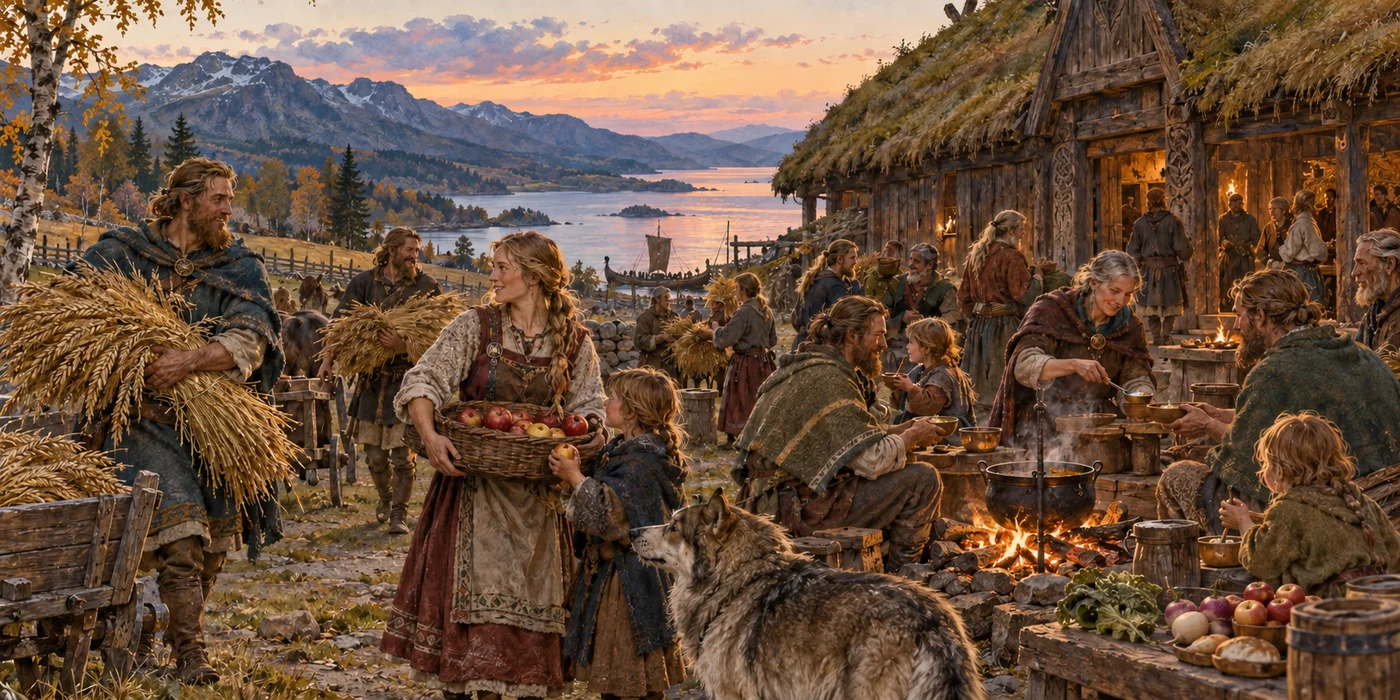
The annual demands of fields and animals organized farming life. Sowing, harvesting and securing winter provisions shaped the household’s work. Farms could stand alone or form part of villages, and their buildings differed between regions. The Swedish History Museum emphasizes this variety rather than one universal Viking farm plan.
Thinking about a farm as a workplace makes it easier to connect a famous port to the food, textiles and materials its population needed.
Sources for this section: 2
Reading an inland landscape
Houses and graves are only part of the evidence. Iron production, traces of cultivation and pollen records help researchers investigate how people used land over time. The museum’s Iron Age overview describes extensive ironworking in northern and central regions, including landscapes that were not dominated by settled agriculture.
That overview spans a long period. A feature described as Iron Age must still be dated before it can be assigned specifically to the Viking Age.
Sources for this section: 3
Northern Sweden was not an empty frontier
Sami communities had their own social organization and patterns of settlement. Hunting, fishing, skilled production and exchanges in hides and furs connected northern populations with other communities. It is misleading to describe all this activity simply as Swedish Vikings expanding into vacant land.
The surviving written descriptions often come from outsiders. Their labels need interpretation; they are not substitutes for the communities’ own histories.
Sources for this section: 4
Farmers, powerful households and the limits of a label
A household’s resources and connections affected its ability to store food, support visitors and participate in exchange. Calling someone a farmer does not tell us whether that person controlled extensive property or depended on another household. Equally, an impressive object does not identify its owner’s exact political title.
A useful reading route therefore moves from the farm itself to winter fodder, access to grazing and northern resource networks. Those subjects explain how a regional economy worked without requiring every place to be a trading town.
Sources for this section: 2, 3
The Evidence
The sources below support this article. Interpretations and limits are explained in the text; this is not an exhaustive research review.