
A Norse story · 2 min read
Heimdall and Loki at Singasteinn
A surviving fragment of a lost contest
Two divine enemies fight over Freyja’s necklace, but the fuller story that once surrounded the scene has not survived.

The scene that remains
Skáldskaparmál describes Heimdall through poetic titles: watchman of the gods, enemy of Loki and seeker of Freyja’s necklace. It links these titles to a contest at places called Vágasker and Singasteinn. Heimdall and Loki struggle over Brísingamen, and Snorri says that they take the form of seals. This striking image is the core of the surviving account. A full beginning, detailed chase and extended conversation are not preserved alongside it.
A poem behind the prose
Snorri names Húsdrápa, a poem by Úlfr Uggason, as a witness to the legend. A surviving stanza presents Heimdall, the son of nine mothers, contending with Loki at Singasteinn. The poem’s compressed language assumes recognition: divine figures appear through relationships and descriptive titles rather than through a modern introduction. Snorri’s prose supplies the identification of the object with Freyja’s necklace and the seal forms. Keeping poem and explanation distinct helps show how much of the familiar modern story depends on the prose guide.
The gaps matter
It is tempting to connect this episode directly to the later tale in which Loki steals a necklace from Freyja’s bedroom. That creates an attractive beginning and ending, but it combines different witnesses. The late Sörla þáttr gives Odin a role in ordering the theft and demanding a perpetual battle; it does not conclude with this seal contest. We therefore present the two accounts separately. They may preserve related traditional material, but their complete relationship cannot now be reconstructed with confidence.
An older rivalry
The fragment expands Heimdall beyond his better-known role as watcher and horn-blower. He can pursue a stolen treasure and contend bodily with Loki. It also helps explain why poetic language can identify a god through an adventure no longer available in full. Reading such a fragment is less like opening a complete novel than finding one carved scene from a vanished hall: enough survives to recognise a confrontation, while the missing panels must remain missing.
Read behind the retelling
Sources & limits
This is a fragmentary myth. The seal contest must not be silently merged with the much later necklace narrative in Sörla þáttr.
Retold in contemporary English. Dialogue is summarized, not presented as a translation. How to read our sources and versions.
Another thread to follow
2 min read
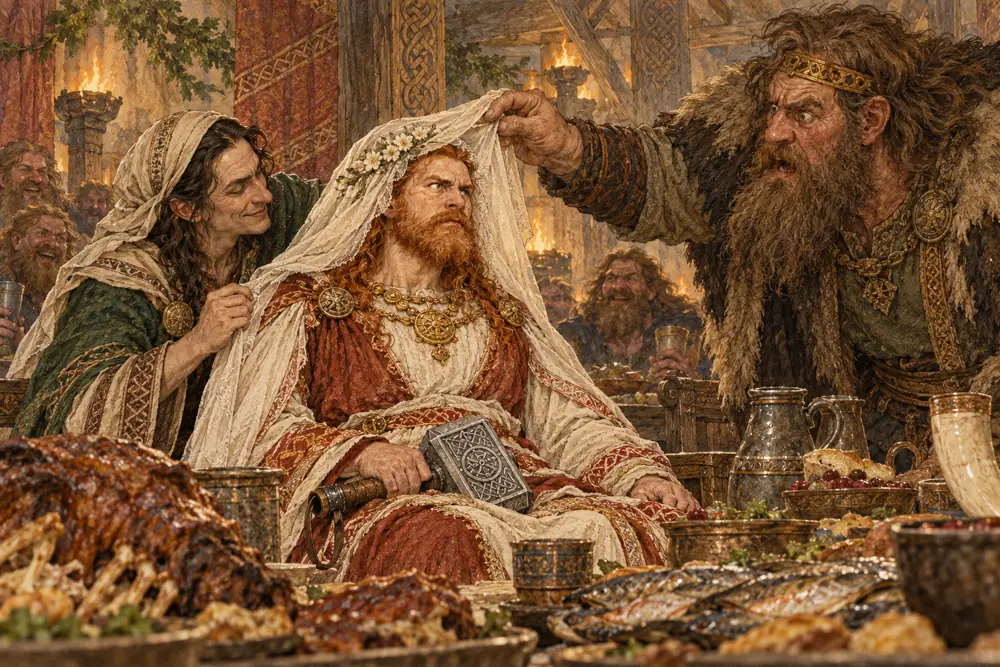
Thor’s extraordinary wedding
When Thrym demands Freyja in exchange for Mjölnir, the gods send a very different bride.
Read the story ↗
2 min read
Loki’s quarrel at Ægir’s feast
Loki enters the gods’ feast and attacks one guest after another in a formal exchange of insults.
Read the story ↗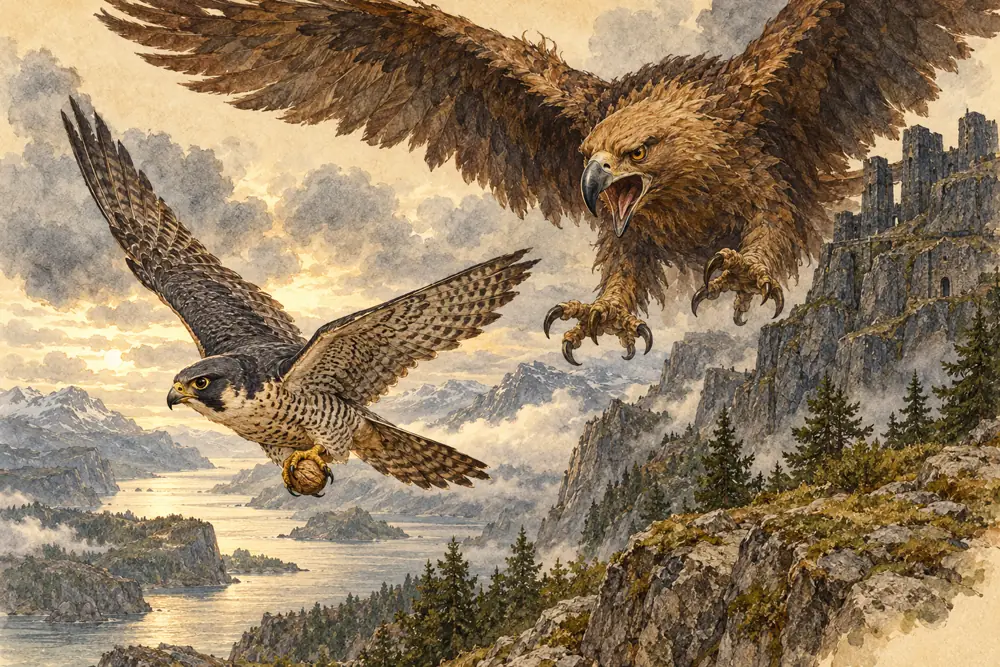
2 min read
Idunn and the stolen apples
A bargain forced from Loki delivers Idunn to Thjazi. Without her, the gods discover that their youth is not secure.
Read the story ↗